Fort Tabanio, Military fortification in Tanah Laut Regency, Indonesia
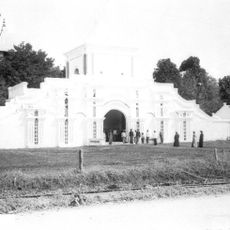
Fort Tabanio is a fortified structure in Tanah Laut Regency with four sides arranged in a squared pattern typical of defensive buildings from that era. Visible today are the remains of earthen embankments and defensive ditches that outline where walls once stood.
On 6 July 1779 the VOC signed a treaty with the Sultan of Banjar whose article 7 provided for a fort at Tabanio; the VOC then built an irregular four-sided fort at the mouth of the Tabanio River, with round bastions at each corner and a gate facing the sea. In 1791 the engineer C. F. Reimer drew a larger design that was never realised. In 1826 Sultan Adam ceded the sparsely populated area around Tabanio to the Dutch, who made the fort a civil administrative centre until it moved to Pelaihari in 1854. In May 1859 Banjar War fighters under Kiai Demang Lehman, Kiai Langlang and Haji Buyasin seized the fort and killed its garrison; the Dutch retook it in August 1859 and stationed fifty soldiers and two cannon there.
The fort's gate faced the sea, and each corner had a round bastion, a layout tied to guarding the mouth of the Tabanio River. Local memory keeps the names of Banjar War fighters who took the fort in May 1859, among them Kiai Demang Lehman, Kiai Langlang and Haji Buyasin.
The site lies near the mouth of the Tabanio River in Tabanio Village, Tanah Laut Regency, roughly a three-hour drive from Banjarmasin via Pelaihari. The remains are scattered and partly overgrown, so a local guide helps locate the bastions and gate. Bring water, a hat and sturdy shoes; the ground is uneven and the climate hot and humid.
The fort guarded commerce in pepper, fisheries, and gold mining in the Palaihari area, making it as much an economic checkpoint as a military stronghold. This trading function explains why European powers invested in building and maintaining the structure.
The community of curious travelers
AroundUs brings together thousands of curated places, local tips, and hidden gems, enriched daily by 94,568 contributors worldwide.