Sabangau National Park, Tropical peat swamp forest national park in Central Kalimantan, Indonesia.
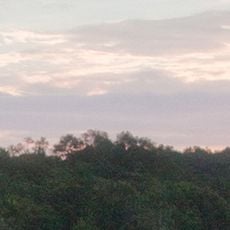
Sabangau National Park protects the Kelompok Hutan Kahayan peat swamp forest, a 5,300 km2 expanse between the Katingan and Kahayan rivers. Its diverse tropical trees stand on a 10–12 m layer of waterlogged, partly decayed plant material over infertile soil. The blackwater Sabangau River runs through the forest, which is divided into a western protected zone and a severely degraded eastern part.
The government declared this forest a national park in 2004 after decades of heavy logging that damaged the ecosystem. The protection aimed to halt further destruction and allow the forest to recover.
The Sabangau river gives the park its name, and the forest is still used by nearby villages. Since 2005, rehabilitation has planted local seedlings such as Shorea balangeran and Dyera polyphylla on 686 hectares, and a further 100,000 trees were planted on 250 hectares with Garuda Indonesia's help, finished in 2008. Wild orangutan research is run jointly with WWF and the village of Keruing.
Access to the park is from Palangka Raya, the provincial capital, which lies close to the western protected sector. The park is divided into three management sections: SPTN I in Palangka Raya, SPTN II in Pulang Pisau and SPTN III in Katingan. The eastern part between the Sabangau and Kahayan rivers is officially designated for agriculture and has sparse cover.
The 2003 estimate of 6,910 orangutans made this the largest single wild population known. The animals are concentrated in the western peat swamp between the Sabangau and Katingan rivers, where forest cover still allows them to move; the degraded eastern side, drained for the failed Mega Rice Project, no longer connects across the river.
The community of curious travelers
AroundUs brings together thousands of curated places, local tips, and hidden gems, enriched daily by 94,126 contributors worldwide.