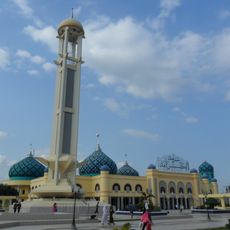
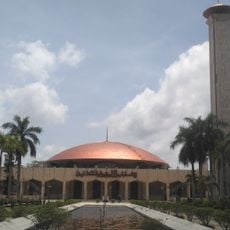
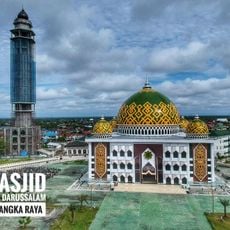
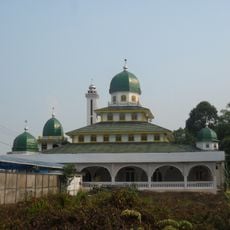
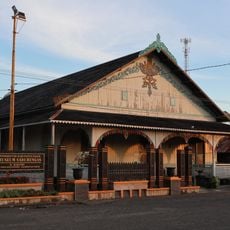
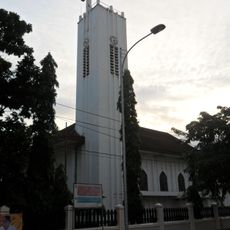
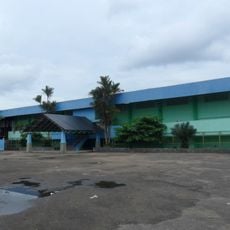
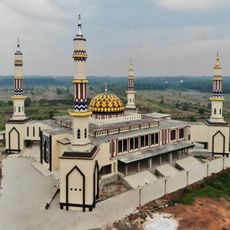
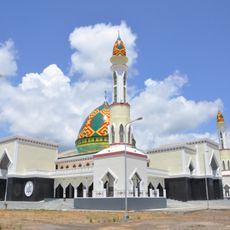
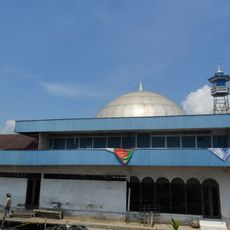
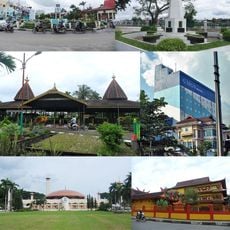
Jami Mosque of Banjarmasin, Islamic place of worship in Banjarmasin, Indonesia.
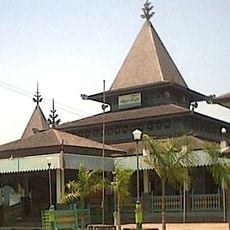
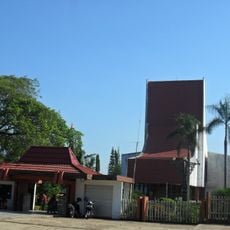
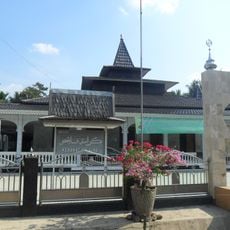
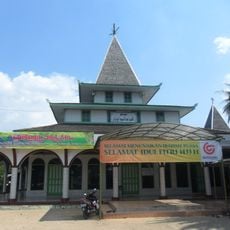
The Jami Mosque of Banjarmasin stands on Jalan Masjid Jami in the Antasan Kecil Timur ward of North Banjarmasin, about 200 metres from the Martapura River. Its five-tiered shingle roof carries a dome at the top, and 41 doors open into a main hall held up by 17 main timber pillars and seating 5,000 people. The mihrab, in the west wall, has four doors and ten windows.
The first mosque on this site was built on the bank of the Martapura River on Saturday, 17 Shawwal 1195 AH (around 1777–1780), during the reign of Prince Tamjidillah; an inscription beside the minbar in Arabic-Malay script records this. Because the riverside ground was prone to landslides and the building could not hold the growing congregation, it was moved about 200 metres inland in 1932 and rebuilt in 1934. The community funded the work itself, refusing a Dutch colonial offer to pay for it from tax revenue, and Ir. Pangeran Muhammad Noor designed the construction.
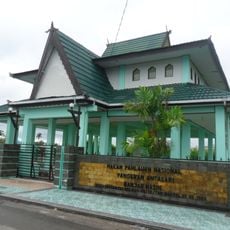
The mosque is also called Masjid Jami Sungai Jingah, after the Sungai Jingah area of Banjarmasin. Its grounds draw pilgrims: the tomb of Prince Antasari lies east of the mosque on Jalan Malkon Temon, and the grave of the cleric K.H. Ahmad Zuhdiannor, known as Guru Zuhdi, lies west on Jalan Belakang Masjid Jami. Worshippers often park in the courtyard.
The mosque is open during daily prayer times, and visitors are welcome outside of active prayers to walk through the space. Modest clothing is expected, and it is worth asking at the entrance whether a visit inside the prayer hall is possible at that moment.
The prayer hall is held up by 17 main timber pillars, a number chosen to match the 17 rak'ahs of the daily obligatory prayers. The building also has 41 entrance doors so that the 5,000 worshippers it can hold enter without crowding.
The community of curious travelers
AroundUs brings together thousands of curated places, local tips, and hidden gems, enriched daily by 93,355 contributors worldwide.