Liang Bua, Archaeological cave site in Ruteng, Indonesia.
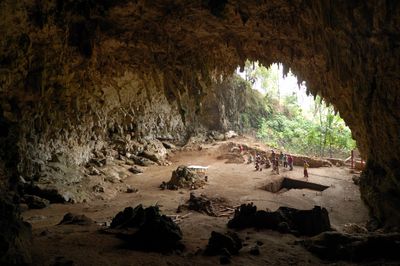
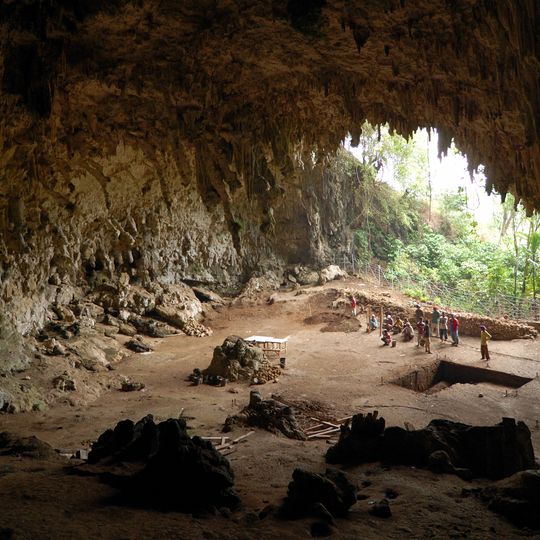
Liang Bua is a limestone cave in Ruteng on Flores island that became known as an archaeological site. The cave consists of a large main chamber with multiple levels where sediment layers document different periods of the past.
Dutch missionary Theodor L. Verhoeven noted the cave's archaeological potential in the 1950s and 1960s. In September 2003, Thomas Sutikna's team uncovered the LB1 skeleton, later named Homo floresiensis. Sediments around the bones date to between 18,000 and 38,000 years ago, and excavations continued as of 2022.
The name comes from the local Manggarai language and means cool cave, referring to the lower temperatures inside. Visitors see the excavation areas where archaeologists continue to work in different soil layers and document new finds.
The cave lies about an hour's drive from Ruteng and is reached by an unpaved road that becomes difficult during rain. Visitors should wear sturdy shoes and bring a flashlight, as lighting inside is limited.
The first skull found in 2003 was thought to belong to a child because of its small size, but its permanent teeth showed it was an adult. The skeleton, coded LB1, became the holotype of Homo floresiensis, about 1 metre tall with a brain of 380 to 420 ml. Excavations continued as of 2022.
The community of curious travelers
AroundUs brings together thousands of curated places, local tips, and hidden gems, enriched daily by 93,374 contributors worldwide.