Capitol Theatre, Heritage-listed movie theater in central business district, Melbourne, Australia.
Capitol Theatre is a cinema in Melbourne's central business district featuring a striking geometric ceiling adorned with thousands of colored lights. The auditorium's overhead pattern of illuminated shapes creates the defining visual character of the space.
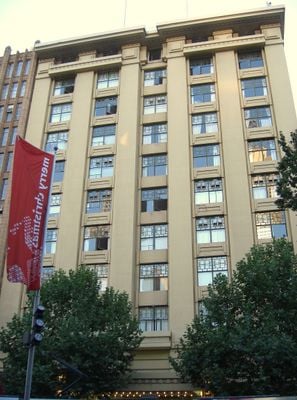
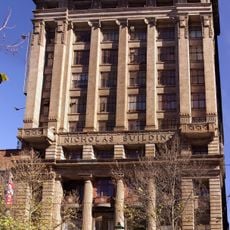
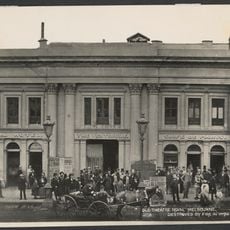
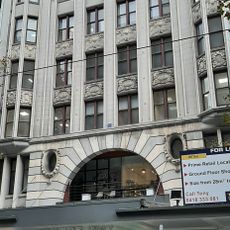
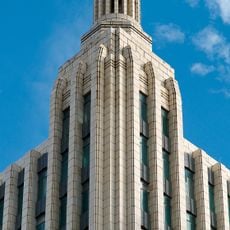
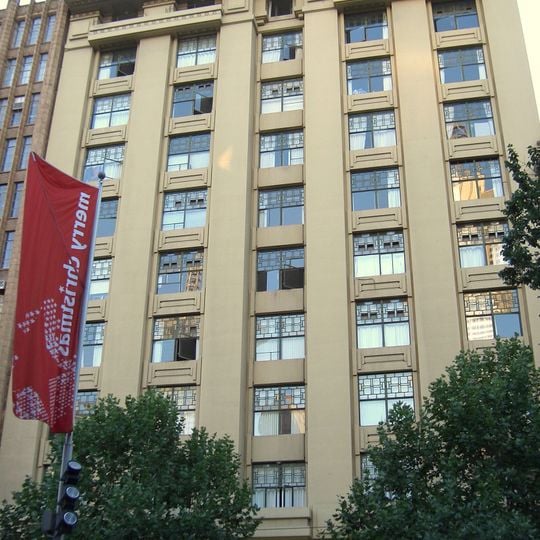
The Capitol was commissioned by Melbourne businessmen including Greek Consul-General Antony J. Lucas and the American-born Phillips brothers, and designed by Walter Burley Griffin with Marion Mahony Griffin. Plans were approved in 1923 and the theatre opened on 7 November 1924 within Capitol House, a complex combining ground-level shops, a basement cafe, a ten-storey Chicagoesque office tower and the auditorium behind. In the early 1960s demolition proposals triggered a conservation campaign led by Robin Boyd; the cinema was saved, its foyer partly replaced by the Capitol Arcade.
The Capitol's name comes from Capitol House, the mixed-use complex of shops, offices and cinema opened in 1924. Its Wurlitzer was the first large organ of its kind in Australia, supplying music and sound effects for silent films and later between shows. The auditorium ceiling's roughly 4,000 coloured globes were once controlled from a single point.
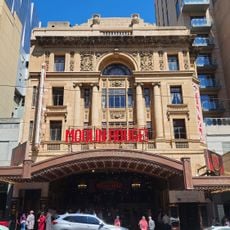
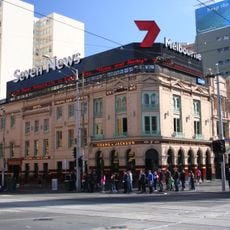
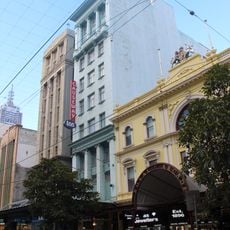
The Capitol stands on Swanston Street in the central business district, its entrance marked by a vertical red banner reading "Capitol" and "Melbourne". The auditorium now seats 600 on a single level, reached past the Capitol Arcade shops that replaced the original street foyer. RMIT University runs the venue, so it opens for ticketed screenings and events rather than daily visits.
The building features a cantilevered concrete veranda that extends over the street, creating an unusual architectural detail. This design solution allows the commercial storefronts below and cinema above to function as an integrated whole.
The community of curious travelers
AroundUs brings together thousands of curated places, local tips, and hidden gems, enriched daily by 93,394 contributors worldwide.