Coranderrk, Indigenous cultural heritage site in Healesville, Australia
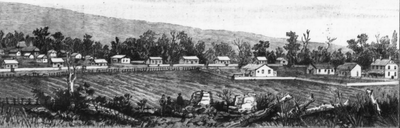
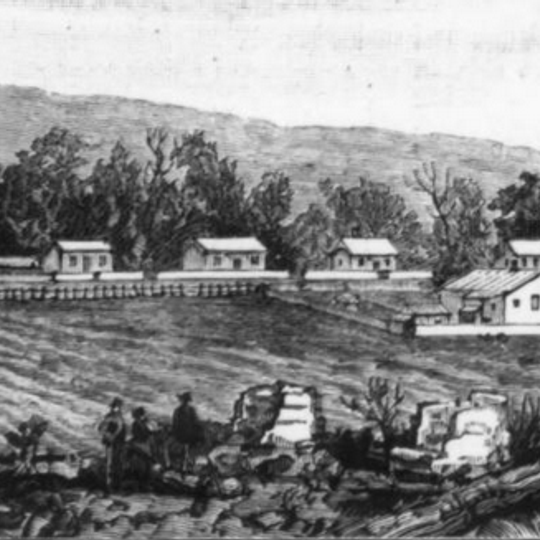
Coranderrk is an Indigenous cultural heritage site spanning about 2300 acres with historical agricultural buildings, traditional gathering spaces, and cultural landmarks distributed across the landscape. The reserve displays how buildings and areas document the daily life, housing, and work practices of former residents.
The reserve was established in 1863 as a place where Aboriginal people built their own settlement and agricultural systems. It became crucial to Australia's first attempts at organized policies affecting Indigenous communities and their governance.
The name Coranderrk comes from the Aboriginal word for the Christmas Bush (Prostanthera lasianthos), a white-flowering summer plant native to the area, chosen by the residents themselves. Louisa Briggs, a Bunurong woman, served as matron of the dormitory from 1876 and spoke for residents at the 1876 inquiry. The 1886 Coranderrk Petition, sent by William Barak and others, survives and is displayed at the Melbourne Museum in Carlton.
Coranderrk lies near the confluence of the Yarra River and Badger Creek, close to Healesville, about 50 kilometres north-east of Melbourne. The surviving buildings stand in a row behind a long post-and-rail fence, with open grass in front; the site is best reached by car. The Coranderrk Petition of 1886 is held at the Melbourne Museum in Carlton, not on site.
The name Coranderrk comes from the Christmas Bush (Prostanthera lasianthos), a white-flowering summer plant native to the area, chosen by the Aboriginal residents themselves. The Coranderrk Petition of 1886, in which William Barak and others asked for freedom to come and go for shearing, harvesting and health, survives and is displayed at the Melbourne Museum in Carlton.
The community of curious travelers
AroundUs brings together thousands of curated places, local tips, and hidden gems, enriched daily by 94,783 contributors worldwide.