Nilpena Ediacara National Park, National park with Ediacaran fossils in South Australia.
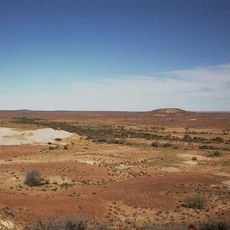
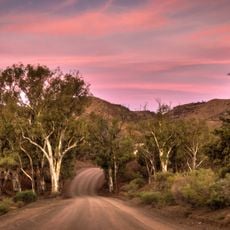
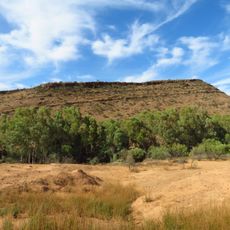
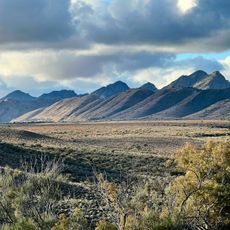
Nilpena Ediacara National Park covers 60,617 hectares of the northern Flinders Ranges, including the Ediacara Hills and a dolomite plateau at the centre of the Ediacara syncline. Its fossil beds hold Ediacaran biota around 550 million years old, such as Spriggina, an organism with a head. The park lies on Adnyamathanha land and adjoins Lake Torrens National Park.
Geologist Reg Sprigg discovered the first fossils here in 1946, making findings that transformed scientific understanding of early life. His discoveries, including an organism with a distinct head, opened new ways of understanding evolution.
The name Ediacara is disputed. One Adnyamathanha derivation is Ithiaka-na-danha, where ithi means zebra finch and aka-na-danha means "to come out". Adnyamathanha woman Beverley Patterson, who heard fossil stories as a child, said Ediacara was the Adnyamathanha word for the zebra finch, a bird endemic to the area.
Access requires booking guided tours in advance, which depart from the gateway at the Nilpena entrance. Visitors should come prepared and follow guide instructions to explore the fossil sites safely and respectfully.
Scientists are currently working to document the fossil beds for a World Heritage nomination, with the dossier set for evaluation in 2026. This ongoing research shows that understanding these ancient life forms continues to advance.
The community of curious travelers
AroundUs brings together thousands of curated places, local tips, and hidden gems, enriched daily by 94,146 contributors worldwide.