Eskbank House, Colonial mansion in Lithgow, Australia
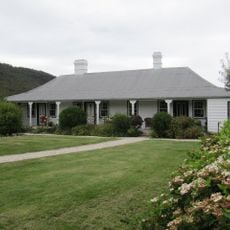
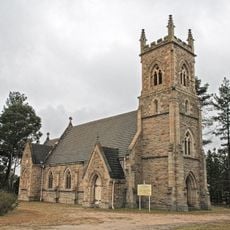
Eskbank House is a single-storey sandstone dwelling with ashlar-coursed masonry, built on a low rise east of Lithgow's centre, with outbuildings including the Garden House, a stone structure with pinnacles possibly drawing on Scottish ecclesiastical architecture. Its water came from a subterranean tank fed by roof water, and a wide circular gravelled carriageway once linked the verandahs through ornamental garden beds.
Thomas Brown, a Scot from near Inverness, built Esk Bank House in 1841–1842 on his Esk Bank Estate, with construction supervised by stonemason Alexander Binning and assisted by convict labour. Brown named the estate after a village on the River Esk near his birthplace. In 1873 he was elected to the New South Wales Parliament, but was disqualified in 1876 after his government coal tender was questioned.
The residence reflects how prosperous colonial families structured their daily lives and conducted business, with rooms arranged to serve both domestic and professional purposes. The layout and furnishings reveal the social hierarchies and household routines of the era.
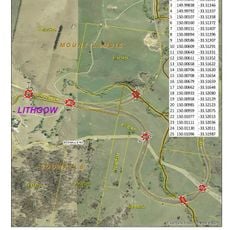
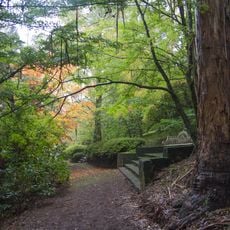
Eskbank House stands at 70 Inch Street, east of Lithgow's city centre, on a low rise reached by the former circular carriageway. The site is owned by Lithgow City Council and run as a museum, event venue and community resource centre, so access to the house and grounds depends on its opening arrangements. The Garden House, a stone outbuilding with pinnacles, stands among the grounds.
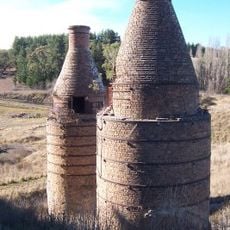
The property preserves original outbuildings and tools that document the development of coal mining and iron production in the region during the 1800s. These items allow visitors to understand the economic activities that took place alongside the residence.
The community of curious travelers
AroundUs brings together thousands of curated places, local tips, and hidden gems, enriched daily by 93,457 contributors worldwide.