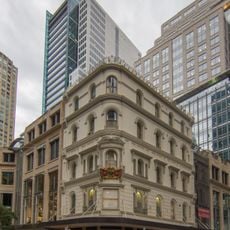
Australian Hall, Heritage-listed building in Sydney Central Business District, Australia
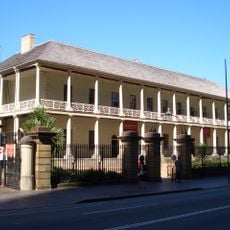
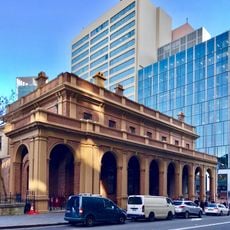
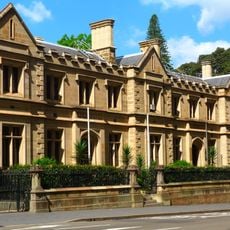
Australian Hall is a three-storey building at 150–152 Elizabeth Street, Sydney, built 1910–1913 for the Concordia German Club. Its street front is a noted example of Federation Romanesque style, and the interior was restored to its 1938 appearance, when the hall seated 453.
Built in 1910–1913 for the Concordia German Club, the building was bought in 1920 by the Knights of the Southern Cross, who renamed its hall Australian Hall in 1922. It later housed the Phillip Theatre (1961–1974), the Rivoli and Mandarin cinemas, and the Cyprus–Hellenic Club until 1998, when the Indigenous Land Corporation purchased it. It was added to the New South Wales State Heritage Register on 2 April 1999 and the Australian National Heritage List on 20 May 2008.
The hall's name comes from its 1922 renaming, when the Knights of the Southern Cross changed it from Miss Bishop's Hall. On 26 January 1938 it hosted the Day of Mourning, when around 100 delegates met after a march of over 1,000 people and issued the pamphlet Aborigines Claims Civil Rights. A silent march of 400 people retraced the route in 1998.
The hall stands at 150–152 Elizabeth Street, between Market and Bathurst streets in the CBD, a short walk from Town Hall station. The Indigenous Land Corporation bought the building in 1998 for the Metropolitan Aboriginal Association, which manages it today, so access depends on the association's activities rather than fixed public opening hours.
The 1938 congress pamphlet Aborigines Claims Civil Rights set out ten grievances; at the 60th anniversary in 1998, 400 marchers retraced the original route and reaffirmed those ten points. The building's interior was later restored to its 1938 appearance.
The community of curious travelers
AroundUs brings together thousands of curated places, local tips, and hidden gems, enriched daily by 93,962 contributors worldwide.