Mount Wilga House, Heritage-listed residence in Hornsby, Australia
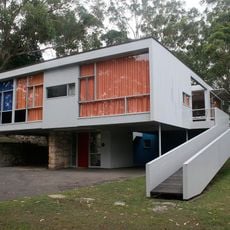
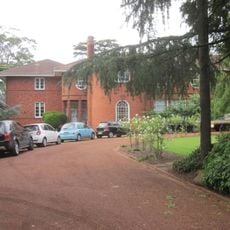
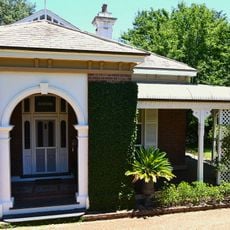
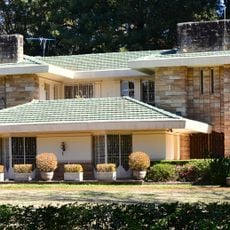
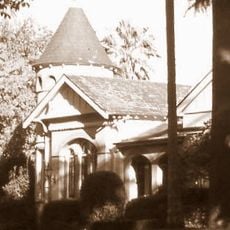
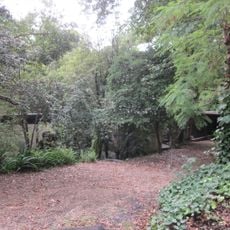
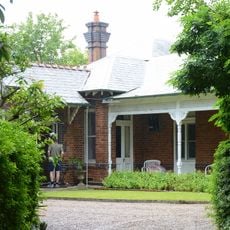
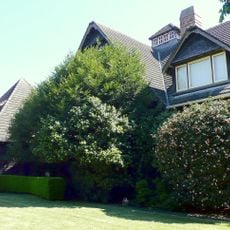
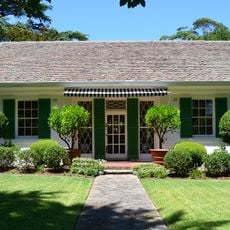
Mount Wilga House is a single-storey Federation Queen Anne residence at 2a Manor Road, Hornsby, built 1913–14 and attributed to Henry Marcus Clark. Its planned garden screened the house from the entrance and revealed it at the end of the approach; the formal north garden and western paddocks and orchard were lost during hospital use, leaving lawns to the south and southeast.
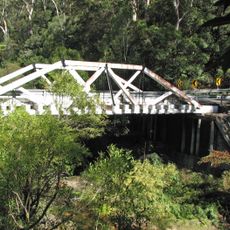
The building was constructed between 1913 and 1914 for retailer Henry Marcus Clark and featured a notable suspension bridge connecting to Hornsby railway station. This infrastructure shaped how the property related to the expanding town during that period.
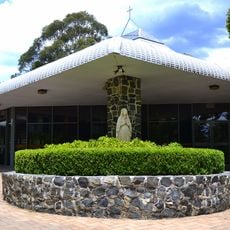
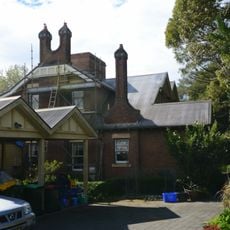
From 1952 to 1987 the house was the Mt Wilga Rehabilitation Hospital, and staff there — John Grant, Eileen Perrottet and Kevin Betts — helped found the Australian Paralympic movement in the 1950s. The site was later split: the southern lot went in 1990 to Nichiren Shoshu Soka Gakkai Australia, which ran it as a Buddhist cultural centre and made small changes to the house and outbuildings.
The house is privately owned and not open to the public, so it can only be seen from Manor Road and Rosamond Street. The 160-metre suspension bridge that Clark built in 1908 towards Hornsby station no longer stands. The former hospital grounds were split into two lots in the late 1980s, and the southern lot has housed a Buddhist cultural centre since 1990.
Henry Marcus Clark died in 1913 while the house was still being built; his widow Georgina completed it in 1914. His son Les Clark later built a very similar house, "Dulcidene Homestead", in Dubbo. The 160-metre suspension bridge Clark put up in 1908 over the gully to Hornsby station has not survived.
The community of curious travelers
AroundUs brings together thousands of curated places, local tips, and hidden gems, enriched daily by 94,400 contributors worldwide.