Wollemi National Park, National park in New South Wales, Australia
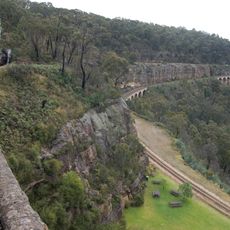
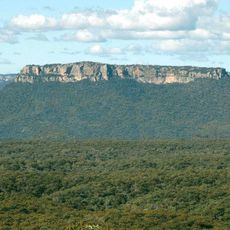
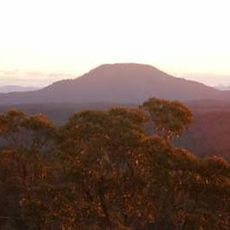
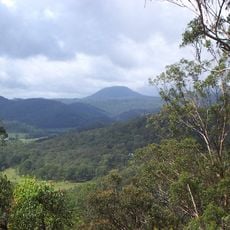
Wollemi National Park is a 501,703-hectare protected area about 130 km northwest of Sydney, the second-largest national park in New South Wales. It lies on the western edge of the Sydney Basin, where sandstone and claystone of the Narrabeen Group have eroded into deep valleys, canyons, cliffs and waterfalls. Eucalypt open forest covers about 90% of the park, with rainforest, heath and grassland in the remainder.
Wollemi National Park was established in 1979 to protect New South Wales's largest wilderness area. In 2000, it became one of the eight protected areas forming the UNESCO World Heritage-listed Greater Blue Mountains Area, the most north-westerly of them. Its name is believed to come from an Aboriginal phrase meaning "watch out" or "look around you".
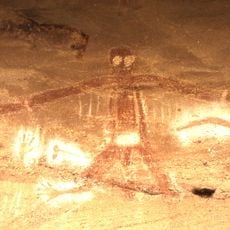
The park lies within the lands of the Wiradjuri, Darkinjung, Dharug, Wonnarua and Yuin nations, who used it for ceremony, travel, food gathering and storytelling. Visitors can see rock art, engravings, axe grinding grooves and stone tools. The name Wollemi is believed to come from an Aboriginal phrase meaning "watch out" or "look around you". In 2003 the Eagle's Reach cave with its paintings was publicly announced.
The park can be explored through multiple trails that vary in difficulty, from easy walks to challenging hikes through remote forest areas. Before visiting, plan your route carefully and check current conditions, as weather can change quickly and some paths require good fitness levels.
The Wollemi pine's wild location is kept secret to protect the groves from disease and trampling. During the 2019–20 bushfires, firefighters abseiled from helicopters into the canyon and used targeted measures to save the fewer than 200 trees. The species was known only from fossils over 200 million years old before 1994.
The community of curious travelers
AroundUs brings together thousands of curated places, local tips, and hidden gems, enriched daily by 94,386 contributors worldwide.