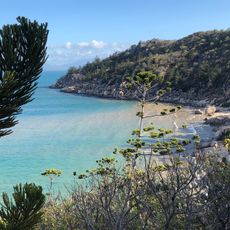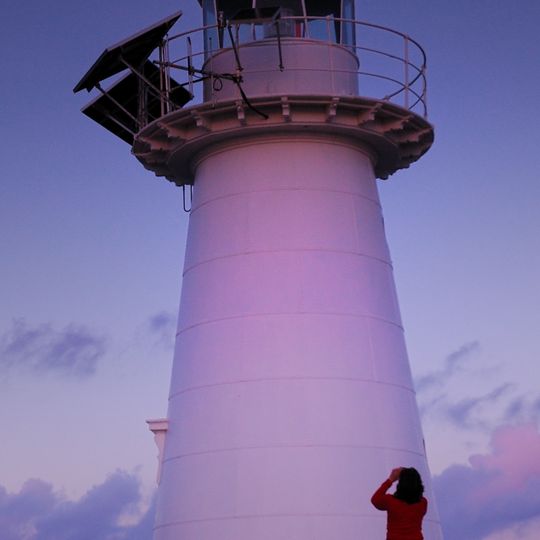
Cape Cleveland Light, Heritage-listed lighthouse in Cape Cleveland, Australia
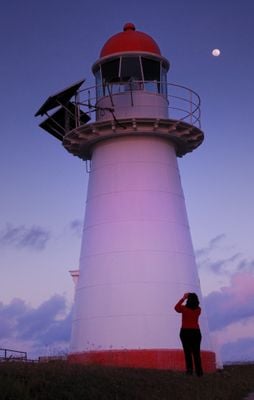
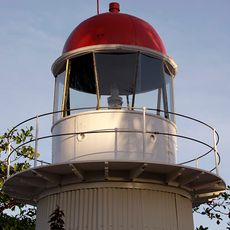
Cape Cleveland Light is a white cylindrical tower with a red top standing at the northern tip of Cleveland Bay. The structure consists of a timber frame reinforced with galvanized iron plates and rises approximately 11 meters above the surrounding landscape.
The lighthouse was constructed in 1879 under Colonial Architect F.D.G. Stanley's direction to guide ships safely through coastal waters. It later served military purposes and played an important role in coastal defense during World War II.
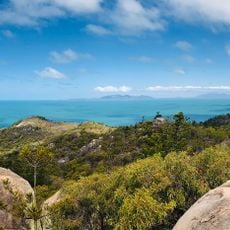
Cape Cleveland was named by Captain James Cook in 1770, either after John Clevland, Secretary to the Admiralty, or after Cleveland in England where Cook was born. The light marks the entrance to Cleveland Bay, proclaimed a port of entry in 1865 as Townsville grew into a major port.
The light and the site are operated by the Australian Maritime Safety Authority and are closed to the public. The site can only be reached by boat or helicopter, about 40 km east of Townsville at the northern tip of Cape Cleveland. There is no road access and no facilities for visitors.
Lighthouse keepers once wound its clockwork mechanism every 75 minutes until 1926, when an acetylene gas lamp system replaced the original light source. This automation transformed daily life for those working at this remote location.
The community of curious travelers
AroundUs brings together thousands of curated places, local tips, and hidden gems, enriched daily by 94,346 contributors worldwide.