Kīlauea Iki, Volcanic crater in Hawaii Volcanoes National Park, United States.
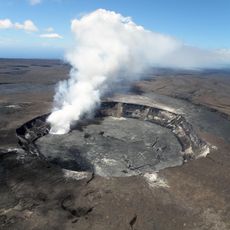
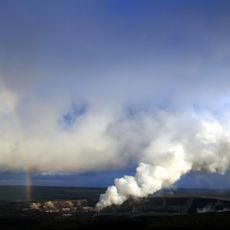
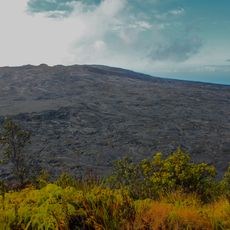
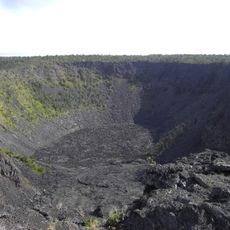
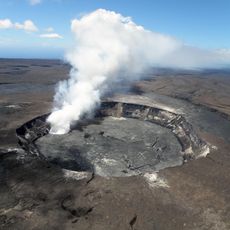
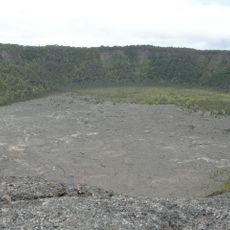
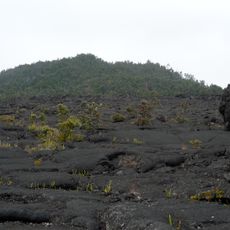
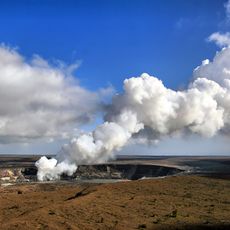
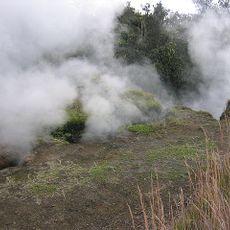
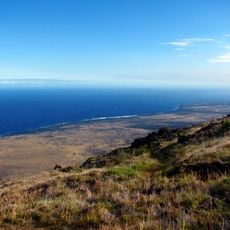
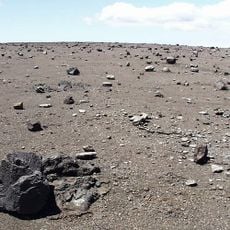
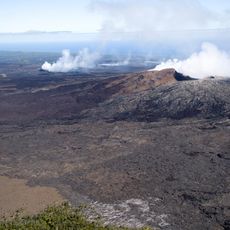
Kīlauea Iki is a 244 m deep pit crater immediately east of Kīlauea's summit caldera, about 3 km long and 1.5 km wide. Its floor is the surface of a lava lake from the 1959 eruption, now an irregular plain of pressure ridges and rock debris. The Puʻu Puaʻi cinder cone rises 70 m on the southwestern rim, and steam vents deposit white calcium sulfate and silica concretions.
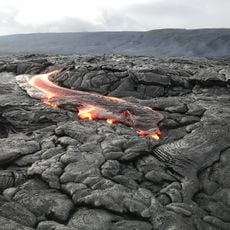
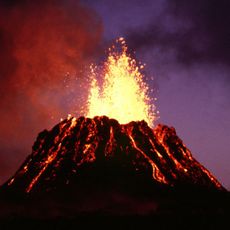
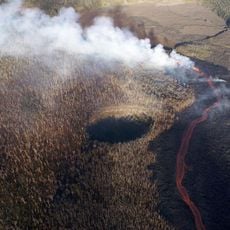
Kīlauea Iki formed in the 15th century when part of the Ailaʻau shield's western flank collapsed during an eruption that partly drained the magma chamber. A minor 1868 eruption, preceded by the magnitude 7.9 Kaʻū earthquake, coated the floor in a thin basalt layer. From 14 November to 19 December 1959, 17 episodes of fountaining and drainback built the 70 m Puʻu Puaʻi cone and left a lava lake 365 feet deep.
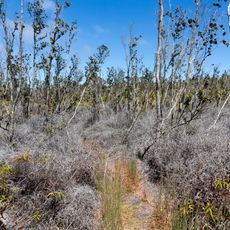
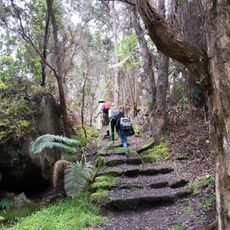
The name Kīlauea Iki is Hawaiian for "Little Kīlauea", distinguishing it from the main summit caldera beside it. The crater is a hiking destination in Hawaiʻi Volcanoes National Park: a trail branches off Crater Rim Drive to descend into and cross the crater lengthwise. On the floor, ʻōhiʻa trees (Metrosideros polymorpha) take root in cracks in the solidified lava lake.
Strong hiking shoes and plenty of water are essential for the descent into the crater, as the dark lava reflects intense heat. Plan for a 2 to 3-hour visit and bring sun protection, since the open terrain offers little shade.
The crater floor is walkable, allowing visitors to hike directly across the solidified lava while feeling the contrast between cool ground and hot steam vents. This rare access lets people experience ongoing volcanic processes up close.
The community of curious travelers
AroundUs brings together thousands of curated places, local tips, and hidden gems, enriched daily by 93,787 contributors worldwide.