Halemaumau Crater, Active volcanic crater at Kilauea volcano, Hawaii County, US
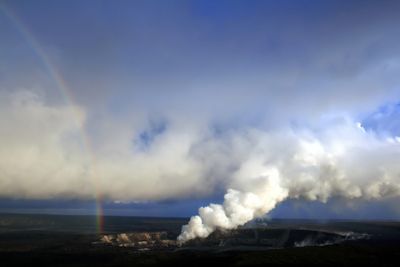
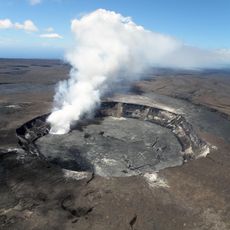
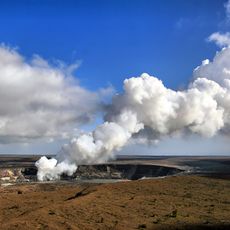
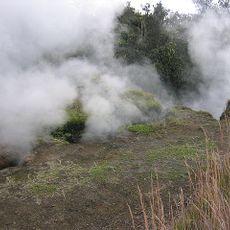
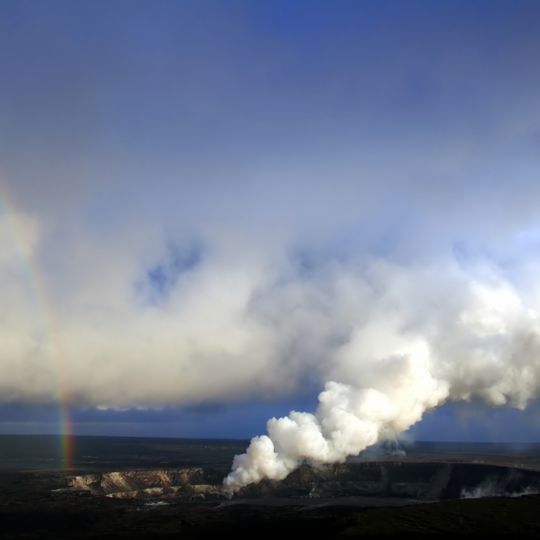
Halemaʻumaʻu is a pit crater in the southwest corner of Kīlauea Caldera at the summit of Kīlauea on Hawaiʻi Island, with a rim near 1,100 m elevation. Before the 2018 collapses it measured roughly 770 by 900 m; the collapses roughly doubled its size, leaving the floor about 600 m below the caldera floor. Its steep inner walls show layered gray and brown rock in patches of pale tan, rust and charcoal, and steam rises from the floor.
Prior to 1924, the crater held an active lava lake before steam explosions transformed its geological structure. Subsequent decades brought multiple eruption cycles with varying volcanic patterns and activity levels.
In Hawaiian tradition Halemaʻumaʻu is the home of Pele, goddess of fire and volcanoes, and the name means "house of the ʻāmaʻu fern". The crater is a place of worship where offerings to Pele are made; the Hawaiian Volcano Observatory opened on its rim in 1912, and the overlook beside it is a customary viewing point.
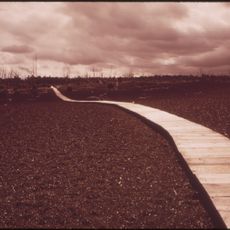
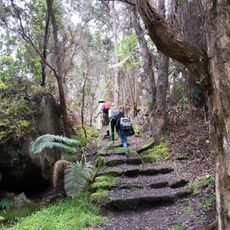
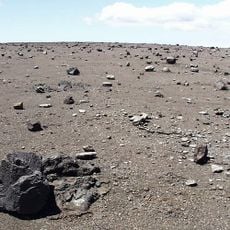
Multiple viewing areas along the crater rim let visitors observe volcanic activity while staying safely away from gas emissions. Sturdy shoes and sun protection are recommended, as the area offers little shade and has rough volcanic surfaces.
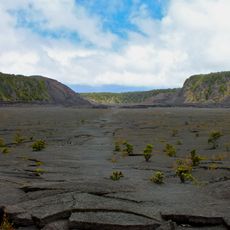
The water pond first observed in summer 2019 deepened to 51 m by December 20, 2020, then boiled away in the December 2020 eruption. Later eruptions partly refilled the crater with lava, and the most recent began on December 23, 2024, with fountaining episodes continuing as of 2026.
The community of curious travelers
AroundUs brings together thousands of curated places, local tips, and hidden gems, enriched daily by 92,873 contributors worldwide.