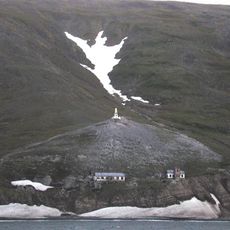
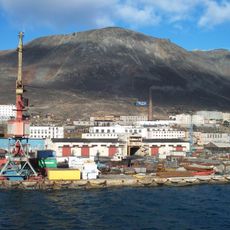
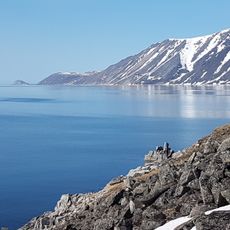
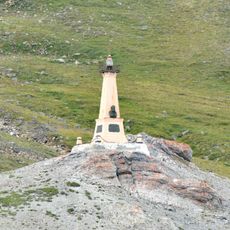
Whale Bone Alley, Archaeological site on Yttygran Island, Russia.
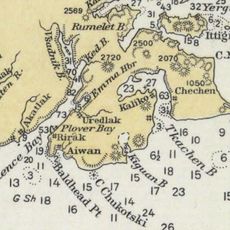
Whale Bone Alley (Siqlluk) is a 550-metre monument on the north coast of Yttygran Island, Chukotka, made of bowhead whale bones. Two parallel rows of skulls set on the ground and jawbones raised toward the sky line a path about 70 cm wide, with large pits nearby. A stone-lined circle called the Sanctuary lies about 50 m west, holding over a hundred pits 1–2 m deep.
Soviet researchers led by M. A. Chlenov found the site in 1976; the bone rows are dated to the 14th–16th centuries AD and belong to the late Punuk culture. In 1990 Soviet authorities organised the first international expedition, led by Arctic specialist Jean Malaurie with French participation. Local communities told researchers their ancestors were not the builders, attributing the alley to the Masigmit, linked to Yupik groups of the Mechigmen area.
The site is believed to have served as a meeting point where different Yupik groups gathered for communal work and ceremonies. The rows of bones and the storage pits next to them show how people organized shared tasks and divided resources.
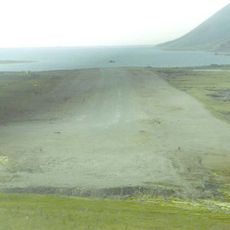
Yttygran Island can only be reached by boat or small aircraft, and the Arctic weather in this area can shift without much warning. Warm and waterproof clothing is a must, and planning the trip carefully in advance is strongly advised.
The site has no traces of dwellings or everyday tools, only ritual structures. Local Yupik communities told 1970s Soviet researchers that their ancestors were not the builders: they attributed the alley to another people, the "masigmit", linked to Yupik groups near the Mechigmen Bay and the Masik camp.
The community of curious travelers
AroundUs brings together thousands of curated places, local tips, and hidden gems, enriched daily by 92,604 contributors worldwide.