Wales Site, Archaeological site in Wales, Alaska, United States.
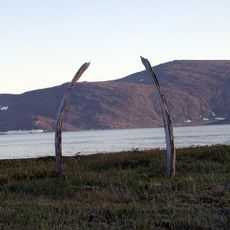
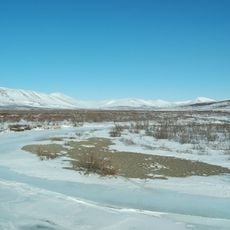
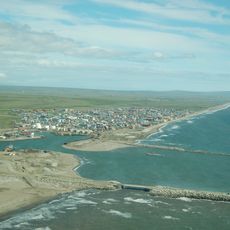
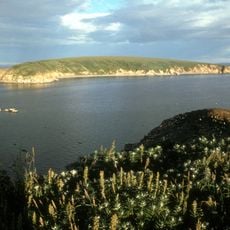
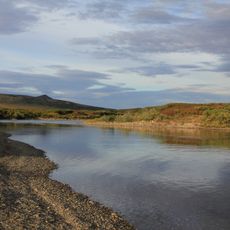
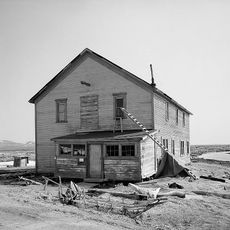
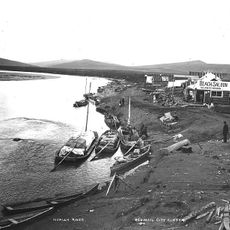
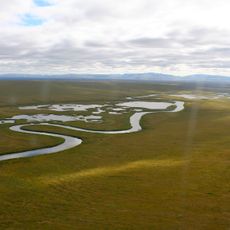
The Wales Site is an archaeological site on the south shore of the Seward Peninsula, near Cape Prince of Wales and the village of Wales, Alaska. Its main component is the Kurigitavik mound (TEL-079), which contains nearly complete semi-subterranean house structures, including one with walrus skulls placed in what appears to be a ritual arrangement. Finds include barbed harpoon heads and bowls made from baleen.
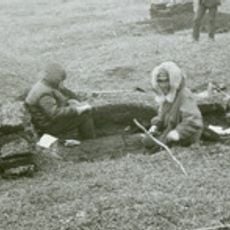
The Kurigitavik mound was first examined in the 1920s by Canadian anthropologist Diamond Jenness, then excavated by Henry B. Collins of the Smithsonian in the 1930s and by Don Dumond in the 1970s. Roger B. Harritt led investigations from the late 1990s into the 2000s. The site was designated a National Historic Landmark in 1962 and listed on the National Register of Historic Places in 1966.
The site's name comes from the nearby village of Wales, and its main mound is called Kurigitavik (survey code TEL-079). Excavations since the 1920s uncovered baleen bowls and barbed harpoon heads in a layer dated to the Punuk period, around 800–1400 CE, showing hunting and household crafts tied to the Bering Strait coast.
Visitors need to arrange access through local authorities and native community representatives, as entry is not open on your own schedule. The site is exposed to unpredictable Arctic weather, so proper clothing and preparation are essential.
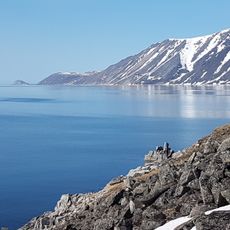
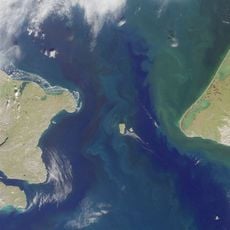
The site sits near the Bering Strait, one of the narrowest passages between Asia and North America, making it a key location for researchers. The artifacts and structures found here help scientists understand how ancient migration routes between continents may have functioned.
The community of curious travelers
AroundUs brings together thousands of curated places, local tips, and hidden gems, enriched daily by 93,563 contributors worldwide.