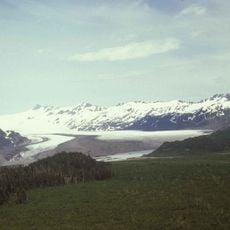
Harding Icefield, Ice field in Kenai Peninsula, US.
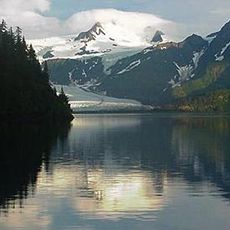
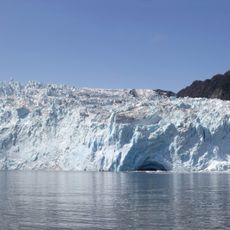
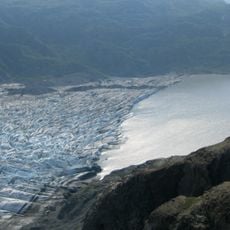
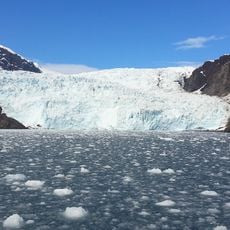
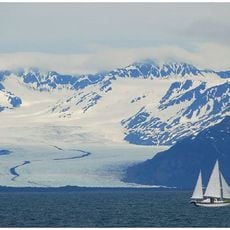
Harding Icefield is a vast expanse of ice in the Kenai Mountains covering hundreds of square miles of southern Alaska, with numerous glaciers flowing outward. The landscape appears as endless white slopes and ice fields interrupted by dark rock peaks that jut through the frozen surface.
Seward residents largely ignored the icefield until the Spruce Creek trail was built in 1922, and President Warren G. Harding's promised visit gave the ice its name. In 1936 the Swiss immigrant Yule Kilcher, later a state senator, tried and failed to cross it. The first documented crossing came in spring 1968, when a ten-person party went from Chernof Glacier east to Exit Glacier in eight days, also making the first ascent of 6,612-foot Truuli Peak.
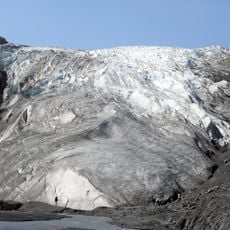
The icefield takes its name from Warren G. Harding, whose promised visit to Alaska in 1922 was enough to attach his name to the feature. The Spruce Creek trail built that year first let Seward residents see its upper reaches. Exit Glacier, reached by a spur road off the Seward Highway, is the most accessible outlet for today's visitors.
Access is gained through a hiking trail that starts at a well-known glacier and ascends higher to reach viewpoints of the surrounding ice field. Visitors should be prepared for sudden weather changes and bring appropriate gear for high-altitude mountain conditions.
A Remote Automated Weather Station stands above Exit Glacier, at the northern end of the icefield, not on a rock peak within the ice. The icefield itself receives over 400 inches (10 m) of snow a year, and its climate is classed as tundra or alpine (Köppen ET).
The community of curious travelers
AroundUs brings together thousands of curated places, local tips, and hidden gems, enriched daily by 92,631 contributors worldwide.