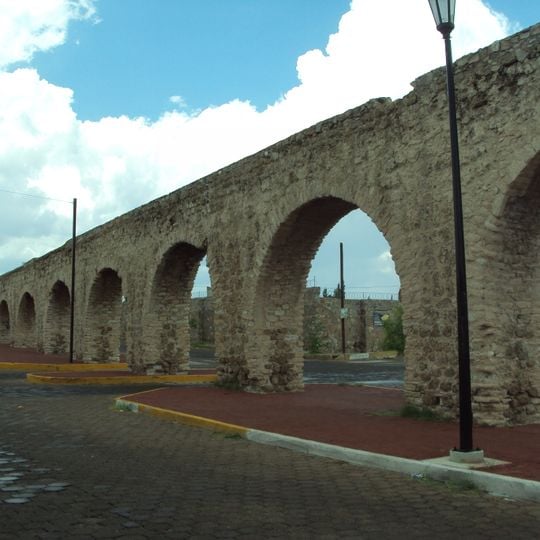
Acueducto de Chihuahua, Colonial aqueduct in Chihuahua, Mexico
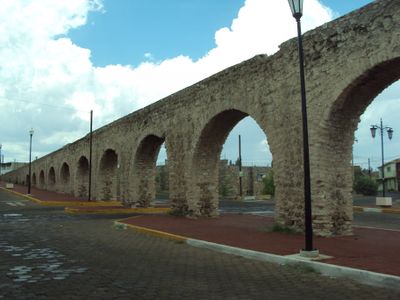
The Chihuahua Aqueduct is a colonial-era monument built from a series of stone arches that spans across the city. The structure consists of multiple arched sections made from carefully fitted stone blocks.
Work on this aqueduct began in the middle of the 1700s and continued over the course of many decades. The project was funded by revenue from mining operations in the surrounding region.
The aqueduct shows the building skills that local engineers developed during Mexico's colonial period. People can see how workers managed to move water across the city using only stone and careful planning.
The best-preserved stretch stands in Parque Acueducto, where one end of the conduit is located and the arches are lit in the evening. Other sections are overgrown, littered or covered in graffiti. The structure runs about 5 km in total, of which roughly 4 km survive.
The aqueduct kept carrying water until 1969, when the initial collection point still fed the filter treatment plant. Its first four purification filters entered service on 2 June 1895 in the district then called Jalisco, now Cuarteles. In the Parque Acueducto, where one end of the line stands, the structure is lit at night.
The community of curious travelers
AroundUs brings together thousands of curated places, local tips, and hidden gems, enriched daily by 94,410 contributors worldwide.