Ciénega Bridge, Concrete arch bridge in Pima County, Arizona
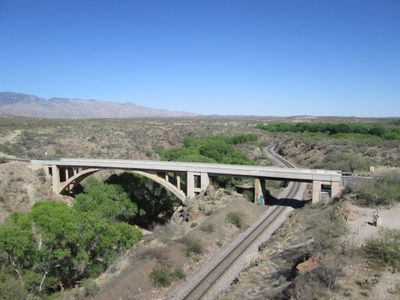
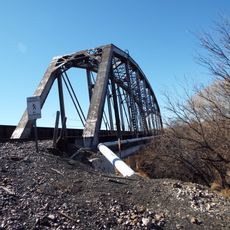
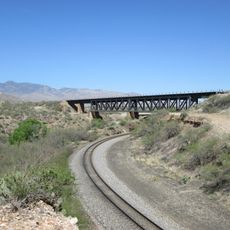
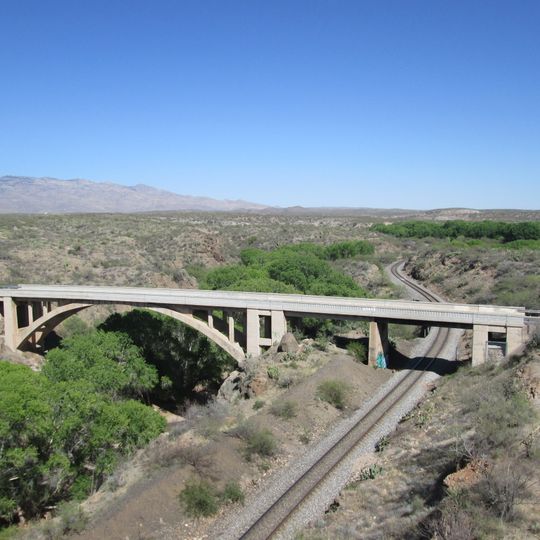
Ciénega Bridge is a concrete arch structure crossing Ciénega Creek and Union Pacific Railroad tracks in Arizona. Its design features five separate spans with twin tapered ribs that narrow toward the ends of the structure.
Built from 1920 to March 1921 by the Arizona Highway Department for $40,000, the Ciénega Bridge was a new crossing over Ciénega Canyon, not a replacement of an earlier bridge. From 1926 it carried U.S. Route 80. After a bypass opened on April 9, 1955, the old bridge passed to Pima County, and it was listed on the National Register of Historic Places on September 30, 1988.
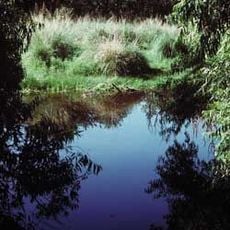
The bridge's name comes from Ciénega Creek, a marshy watercourse whose Spanish-derived name refers to a swampy area. Since 2018 Marsh Station Road over the bridge has been signed as part of Historic U.S. Route 80, a designation that draws drivers tracing the old highway between Tucson and Benson.
The bridge carries Marsh Station Road, part of Historic U.S. Route 80 since 2018, so it can be crossed by car. The deck is 23 feet (7 m) wide, and the original guardrails were replaced by Jersey barriers in 1989. The structure stands above Ciénega Creek and the Union Pacific main line near Vail, southeast of Tucson.
The bridge's eastern approach had an eight-degree downhill curve that led to 11 motorists dying in separate accidents between 1952 and 1955, when vehicles missed the curve and dropped into the creek bed. This record made US 80 one of Arizona's most dangerous roads and prompted the 1955 bypass.
The community of curious travelers
AroundUs brings together thousands of curated places, local tips, and hidden gems, enriched daily by 94,676 contributors worldwide.