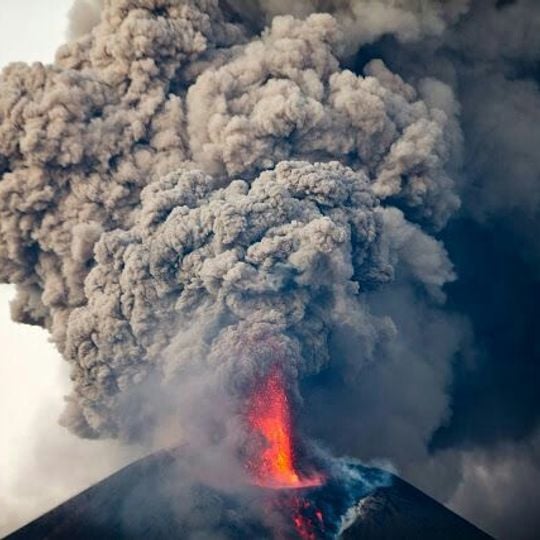
Volcán Momotombo, Stratovolcano on Lake Managua, Nicaragua.
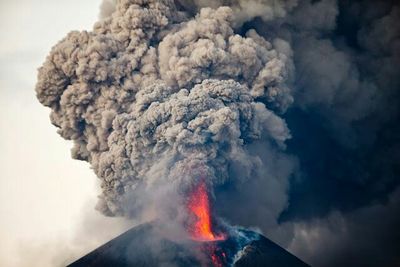
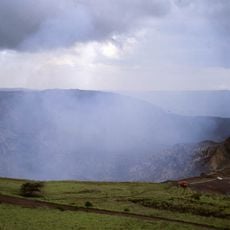
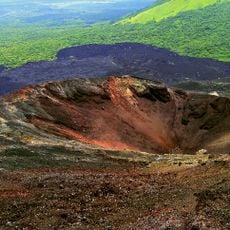
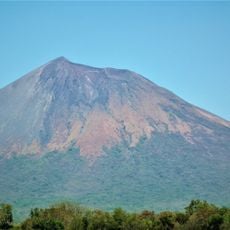
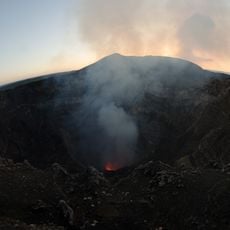
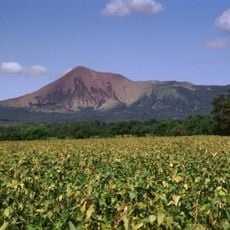
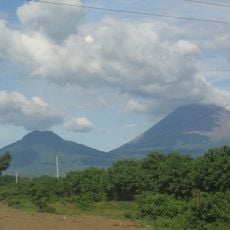
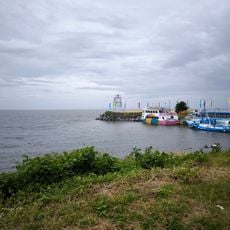
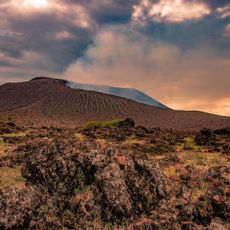
Volcán Momotombo is a 1297-meter stratovolcano on the shore of Lake Managua in northwestern Nicaragua, recognizable by its nearly perfect symmetrical cone. The summit crater opens into an oval depression from which smoke and steam rise above the surrounding landscape.
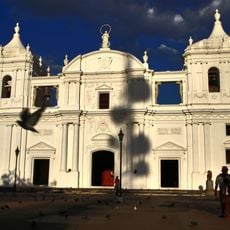
The eruption in 1610 sent ash rains over the nearby colonial city of León and forced its inhabitants to establish a new settlement to the west. Further eruptions followed through the centuries, with a particularly active phase between 2015 and 2016 that left fresh lava flows on the slope.
The name Momotombo comes from the Nahuatl language and means "great boiling peak", reflecting how indigenous peoples perceived the mountain's steaming vents and periodic eruptions. Local communities near the lake still share stories about the volcano's role in their ancestors' daily lives and seasonal rhythms.
Visitors need authorization from the nearby geothermal power station before entering the trail, and should expect steep, loose terrain covered in volcanic ash. Local guides know the current conditions on the slope and can help with route choices when recent activity has altered the path.
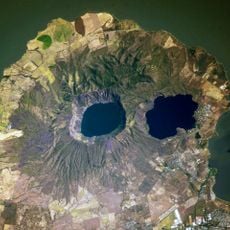
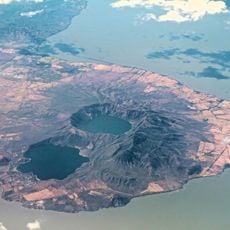
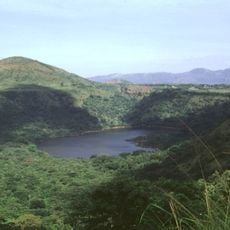
The lava flows on the northwestern flank have extended into the Monte Galán caldera, an older volcanic structure that partially surrounds the younger cone. Some of these flows formed during the most recent eruptive phase and remain black and unweathered.
The community of curious travelers
AroundUs brings together thousands of curated places, local tips, and hidden gems, enriched daily by 91,181 contributors worldwide.