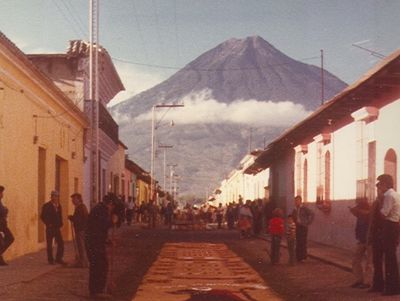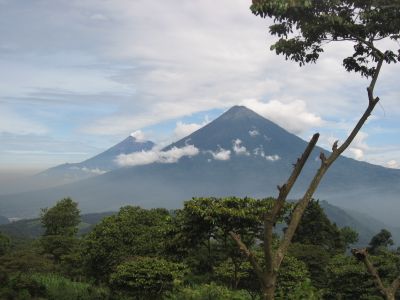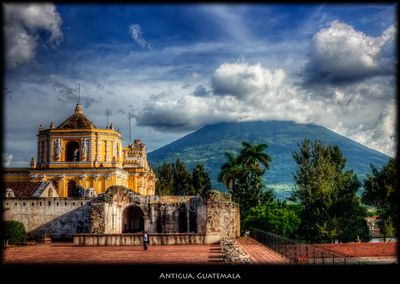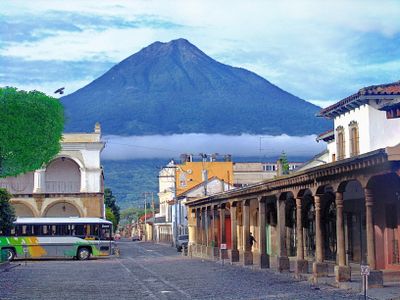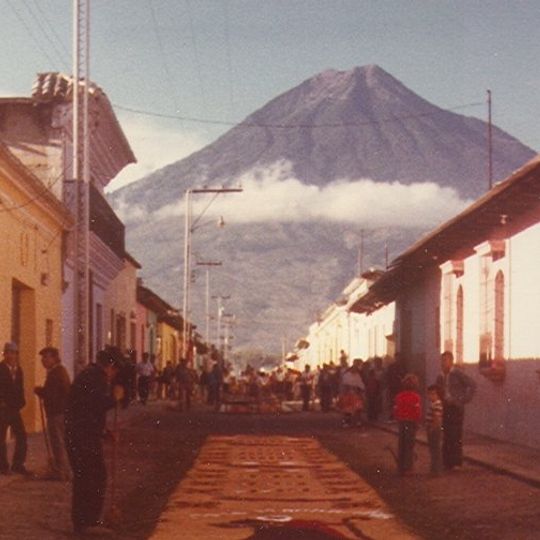
Volcán de Agua, Stratovolcano in Sacatepéquez Department, Guatemala.
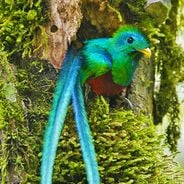
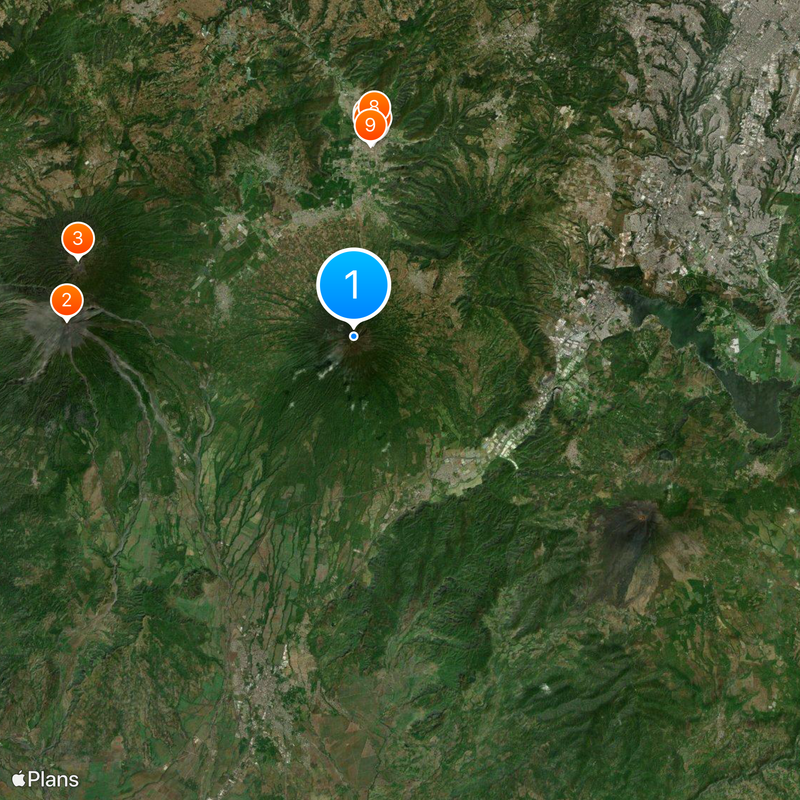
Volcán de Agua is a stratovolcano with a perfectly symmetrical cone in Sacatepéquez Department rising 3,760 meters (12,336 feet) above sea level. Dense cloud forest covers its lower slopes while the upper sections transition into open grassland with scattered rocks.
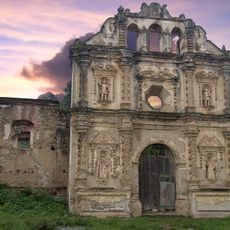
The mountain formed around 20,000 years ago through a sequence of eruptions that ended after an early phase of volcanic activity. In September 1541, an earthquake triggered a catastrophic mudflow and debris avalanche that destroyed Guatemala's first capital.
Indigenous K'iche' and Kaqchikel people traditionally call the mountain Hunahpú after an important figure from their sacred book. Many locals still regard the summit as a place of power and maintain spiritual practices there.
The ascent begins in Santa María de Jesús village and takes about four to five hours, requiring sturdy footwear and warm clothing for the summit. Tourism police often accompany hikers on upper sections, providing both security and route guidance.
Though the name means Water Volcano, no crater lake ever existed at the summit as many travelers assume. The name instead comes from the massive amounts of water that rushed down during the 1541 disaster, burying the colonial town.
The community of curious travelers
AroundUs brings together thousands of curated places, local tips, and hidden gems, enriched daily by 91,640 contributors worldwide.