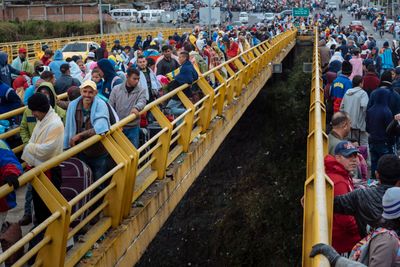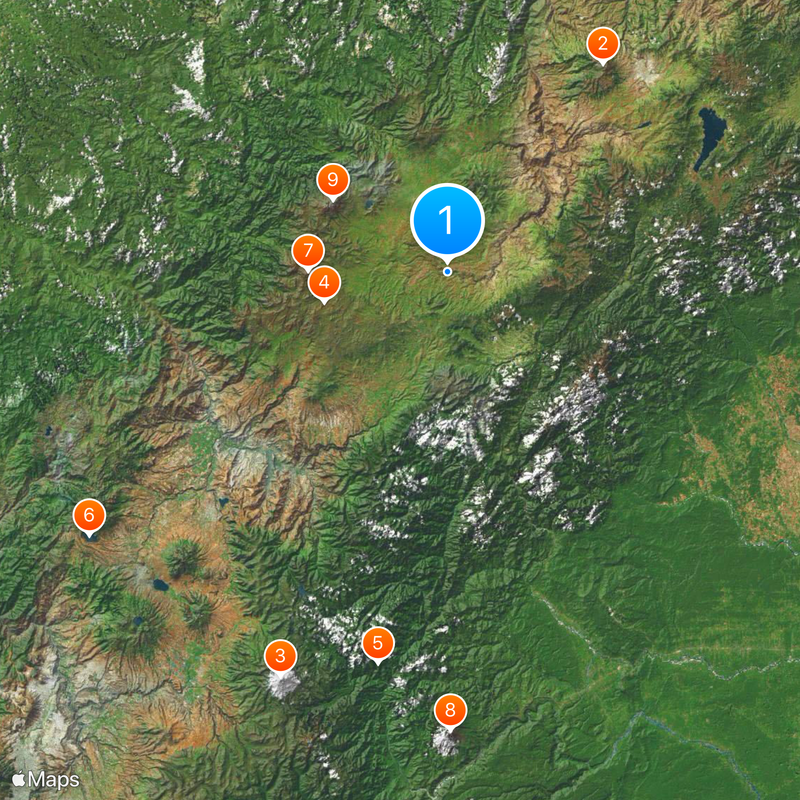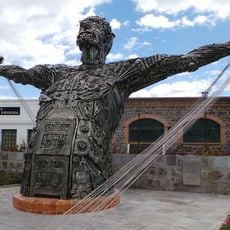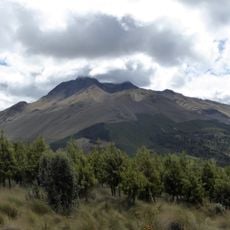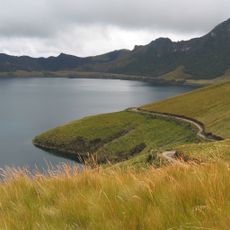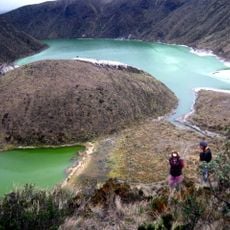
Rumichaca Bridge, International stone bridge at Colombia-Ecuador border, Ipiales.
Rumichaca Bridge carries the Pan-American Highway over the Carchi River, called Guáitara in Colombia, at 2,763 metres. The modern concrete bridge, 80 metres long and 34 metres above the riverbed, opened in 1973; a parallel span with three vehicle lanes, a pedestrian lane and a bicycle lane was inaugurated on 25 November 2013. The natural stone bridge, the Inca Bridge, lies 80 metres upstream, with the old customs houses on top.
The name comes from Quechua words 'rumi' meaning stone and 'chaka' meaning bridge, reflecting the indigenous heritage of the region. This location marked the northern boundary of the Inca Empire and represents a passage that connected pre-colonial civilizations.
The name Rumichaca comes from Quechua rumi (stone) and chaka (bridge). The old customs houses on the natural bridge were remodeled in 2000 (Ecuador) and 2009 (Colombia) into Binational Centers of Culture and Tourism, and the border has been open 24 hours since 1992.
Border control stations operate on both sides of the crossing, where officials process documents for people and vehicles. It helps to keep identification papers easily accessible and prepare for possible delays during peak travel times.
The natural stone arch was the Inca Empire's northernmost outpost, taken from the Pasto people in the early 16th century; chronicler Pedro Cieza de León described it in 1543. The modern concrete bridge, opened in 1973, stands 80 metres upstream and 34 metres above the Guáitara riverbed. In 2013, 57.9 percent of Colombia's exports to Ecuador crossed here.
The community of curious travelers
AroundUs brings together thousands of curated places, local tips, and hidden gems, enriched daily by 92,657 contributors worldwide.