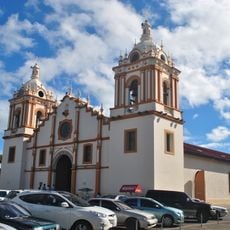
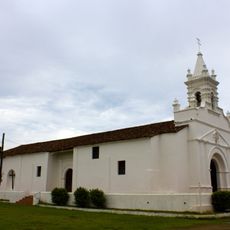
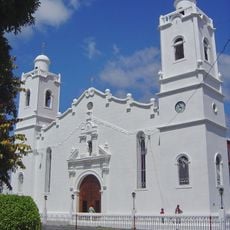
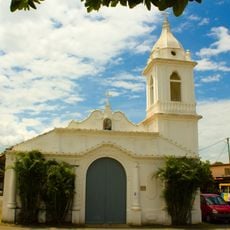
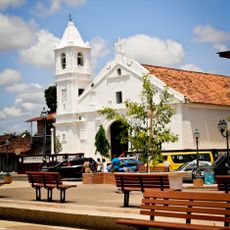
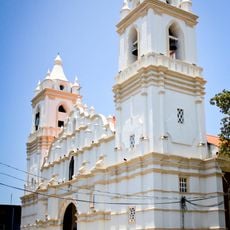
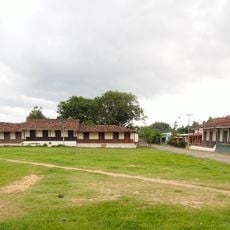
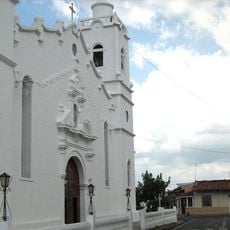
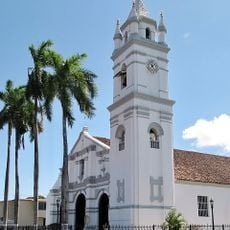
Iglesia de Santiago Apóstol, Spanish colonial church in Natá, Panama.
The Iglesia de Santiago Apóstol, also called the Basílica de Natá, is a Catholic church in Natá, Coclé Province, Panama. Construction began in 1522 and took more than a century, finishing between the last third of the 17th century and the end of the 18th. It is considered the Spanish legacy's most historically significant religious building in Panama.
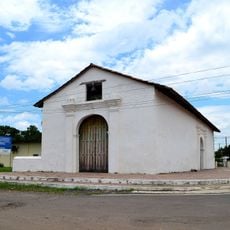
Pedro Arias Dávila founded Natá in 1522 and marked the site for the parish church, dedicated to Saint James. Construction took more than a century, finishing between the late 17th and late 18th centuries. By the late 19th century it stood with two chapels, La Soledad and San Juan de Dios. Law 68 of 1941 declared the parish church a national historic monument.
Local artisans created detailed wood carvings throughout the church, incorporating indigenous motifs such as fruits, leaves, and feathered serpents into the altar designs. These works show how local artistic traditions merged with the religious demands of Spanish colonial times.
The church stands in Natá's town centre in Coclé Province, reached by leaving the Panamericana for the town. It is a working parish church, so visits fit around mass and parish events. The building is a national historic monument, and laws from 1908 and 1924 provided funds to keep its appearance and construction style unchanged.
The interior holds a controversial 1758 painting of the Holy Trinity by José Samaniego depicting three identical Christ figures instead of traditional representations. This unusual artwork still draws attention from visitors wondering what the artist intended with this unconventional interpretation.
The community of curious travelers
AroundUs brings together thousands of curated places, local tips, and hidden gems, enriched daily by 92,651 contributors worldwide.