Tequendama Falls, Waterfall in Soacha, Colombia.
Tequendama Falls is a waterfall on the Bogotá River in the rural area of Soacha, Cundinamarca, about 30 km southwest of Bogotá. The river narrows to roughly 18 metres at the brink and drops 132 metres in a single column from a flat lip of a high vertical rock wall. The water lands on a dark rounded rock shelf, then runs down a slope of grey and brown boulders as small white pools and rivulets.
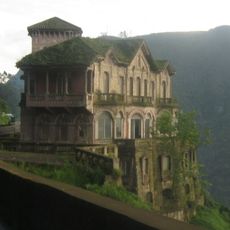
The falls were painted in 1854 by the American landscape painter Frederic Edwin Church. In 1900 the El Charquito hydroelectric plant opened upstream, using Bogotá River water before the drop; work on the Muña reservoir began in 1940 and cut much of the flow. The clifftop house beside the road, the former Hotel El Refugio del Salto, opened in 1923 and reopened in 2014 as the Casa Museo Salto de Tequendama Biodiversidad y Cultura.
In Chibcha, Tequendama means "he who precipitated downward". Muisca religion holds that the hero Bochica struck the rock with his staff to release the water flooding the Bogotá savanna. Another legend says that during the Spanish conquest indigenous people jumped from the falls to become eagles and fly to freedom.
The falls lie about 30 km southwest of Bogotá in the rural district of Soacha, reached by road toward El Colegio; the B55 route from Ciudad Verde serves Bosatama, Charquito and the falls. Access is also possible from San Antonio del Tequendama. The river is heavily polluted, and in December the falls can run completely dry.
The house on the cliff edge beside the road was the Hotel El Refugio del Salto, opened in 1923 in French architectural style as a rest and lodging house for wealthy guests, with a lookout over the falls. In 2014 it reopened as the Casa Museo Salto de Tequendama Biodiversidad y Cultura, and its restoration has been aided by the French government.
The community of curious travelers
AroundUs brings together thousands of curated places, local tips, and hidden gems, enriched daily by 93,038 contributors worldwide.