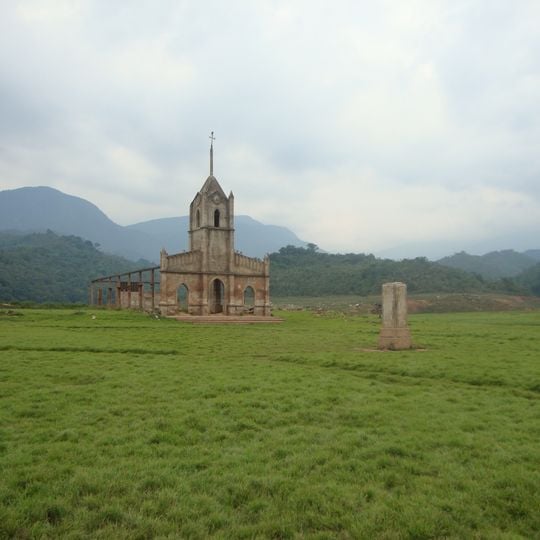
Potosí, Colonial ruins in Táchira, Venezuela.
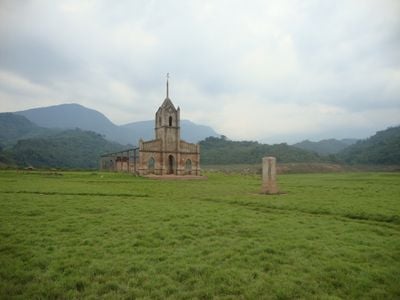
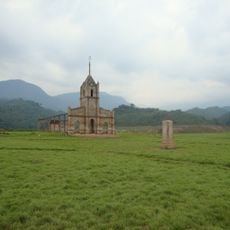
Potosí is a ruined town in Táchira whose church facade still stands on a stepped stone platform, with a square bell tower topped by a pointed roof and cross. Two arched openings pierce the tower, and a large arched doorway flanked by two arched windows sits below. To the left, a roofless colonnade of rectangular openings runs along the grass.
The town was submerged in 1985 when the Venezuelan government built a hydroelectric dam on the Uribante Reservoir to generate power. The church structure survived attempts to demolish it and remained partially visible above the water line.
This site was once a mountain village where a community lived before flooding changed everything. When water levels drop, former residents return to walk through what remains and recall their shared past.
Access to the site depends on water levels in the reservoir, which drop most reliably during dry seasons and El Niño patterns. Check local conditions before visiting to determine whether the ruins are accessible by foot or water.
The church steeple, 26 metres tall, once served as the reservoir's high-water mark. After 26 years submerged, a 30-metre drop in the water level during the 2009-10 El Niño drought exposed the facade again, while only the front of the church remains standing.
The community of curious travelers
AroundUs brings together thousands of curated places, local tips, and hidden gems, enriched daily by 93,767 contributors worldwide.