Puerto Bolivar, Colombia, Coal-export port in Uribia, La Guajira, Colombia
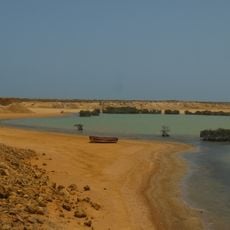
Puerto Bolívar is a coal-export port at the south head of Bahía Portete in Uribia, La Guajira. A 150 km standard-gauge railway links it to the El Cerrejón mine; two trains of 120 wagons carry 48,000 tonnes daily. Its channel is 19 m deep, 225 m wide and 4 km long, and a 10,000-tonne-per-hour ship loader fills bulk carriers.
Puerto Bolívar was created by decree 995 of 5 April 1982 under President Julio César Turbay Ayala as the Harbormaster of Bahía Portete, to consolidate state presence and exercise sovereignty over ships calling at Portete and Puerto Nuevo. Decree 1589 of 19 May 1986, under President Belisario Betancur, renamed it Harbormaster of Puerto Bolívar. Coal loading began in 1985, fed by a 150 km standard-gauge railway from the El Cerrejón mine.
The port takes its name from Simón Bolívar, as does the department's capital Riohacha's neighbour; the name was given by Decree 1589 of 19 May 1986 under President Belisario Betancur, replacing the earlier Puerto de Bahía Portete. Coal from El Cerrejón, 150 km south, is the cargo handled here, loaded by ship loaders rated at 10,000 tonnes per hour.
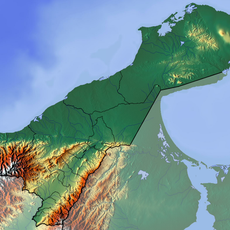
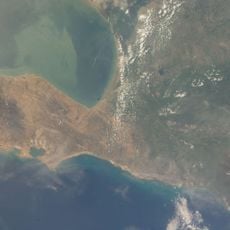
The port lies at the south head of Bahía Portete, 75 km north of Uribia and 166 km from Riohacha, reached by a 150 km motorway built in 1982. It is a working coal terminal with conveyor belts and direct ship loading, so access is controlled; the nearby airport has a restricted flight area. The climate is hot desert, with rain only in September, October and November.
The port's channel is 19 metres deep, 225 metres wide and four kilometres long. Coal arrives by the country's only standard-gauge freight railway, 150 km of track from the Cerrejón mine, carried by two trains of 120 wagons that move 48,000 tonnes a day.
The community of curious travelers
AroundUs brings together thousands of curated places, local tips, and hidden gems, enriched daily by 94,044 contributors worldwide.