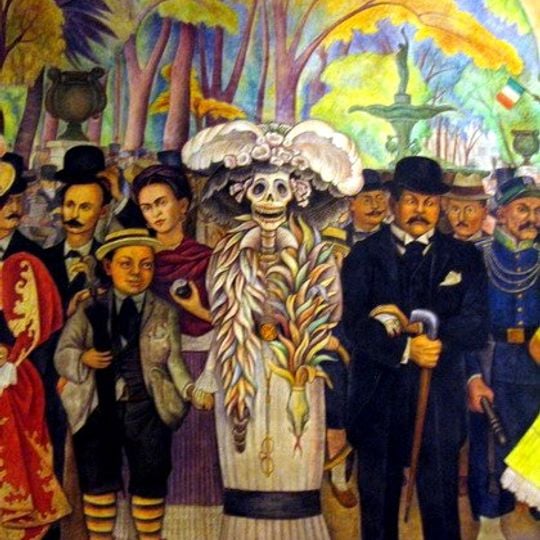
Sueño de una Tarde Dominical en la Alameda Central, Mural in the historic center of Mexico City, Mexico
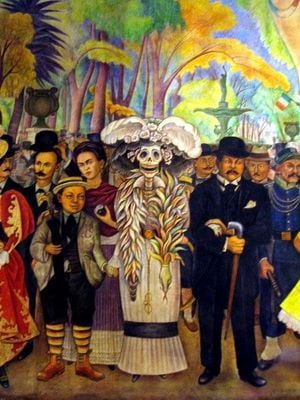
Sueño de una Tarde Dominical en la Alameda Central is a 15.6-metre-wide mural Diego Rivera painted in 1946–1947, now the principal work of the Museo Mural Diego Rivera. It shows over a hundred figures from four centuries of Mexican history strolling through the Alameda; about fifty have been identified. At the centre, the skeletal La Catrina, wearing a feathered serpent boa, holds arms with José Guadalupe Posada and the hand of Rivera as a child.
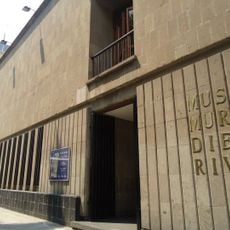
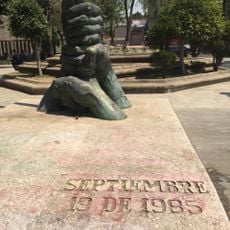
Rivera painted the fresco in 1947 at the Hotel Del Prado, where it remained until the major earthquake of 1985. After the damage it was removed from the building and brought to the current museum.
The central skeleton is La Calavera Catrina, created by engraver José Guadalupe Posada, who walks arm in arm with her in a black suit and cane. She wears a feathered-serpent boa recalling Quetzalcóatl. Frida Kahlo stands just behind and between Rivera as a boy and Catrina, one hand on his shoulder, holding a yin-yang device.
The museum provides information panels in several languages that identify all the people in the work. Time in front of the mural passes quickly because there are many details to discover.
Rivera painted Ignacio Ramírez holding a sign reading "Dios no existe" (God does not exist). He refused to remove the words, so the mural stayed hidden for nine years until he agreed to paint them out, saying he was an atheist and saw religions as a collective neurosis.
The community of curious travelers
AroundUs brings together thousands of curated places, local tips, and hidden gems, enriched daily by 92,749 contributors worldwide.