Palacio de la Secretaría de Comunicaciones y Obras Públicas, Art museum in Centro Histórico, Mexico City, Mexico
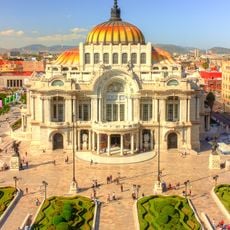
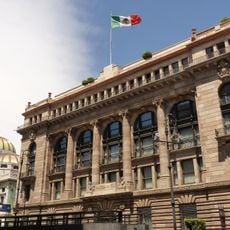
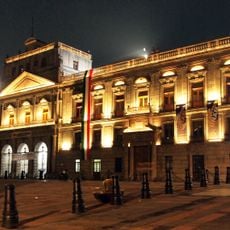
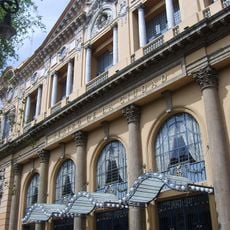
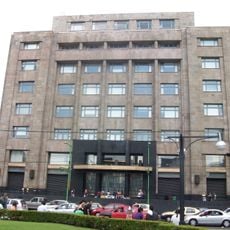
The Palacio de la Secretaría de Comunicaciones y Obras Públicas is an imposing building showcasing Italian Renaissance and French classical design through its arches, columns, and detailed ornamental work. Gray stone construction forms its rectangular footprint, which occupies a prominent location on Tacuba Street.
The building was erected from 1904 to 1911 under President Porfirio Díaz, following a design by Italian architect Silvio Contri. It replaced the Hospital de San Andrés, a Jesuit foundation converted into a hospital in 1779 and active until 1905; there the body of Emperor Maximilian of Habsburg was embalmed and displayed after his execution, a fact recalled by a plaque. The palace housed the Archivo General de la Nación from 1973 and became the Museo Nacional de Arte in 1982.
Since 1982 the palace has housed the Museo Nacional de Arte (MUNAL). The building was first assigned to the Archivo General de la Nación in 1973, and the museum carried out a restoration of the property in 1997. A plaque on the palace recalls that Emperor Maximilian of Habsburg was embalmed and displayed in the former Hospital de San Andrés on this site.
The building faces the Plaza Manuel Tolsá on Tacuba Street, a short walk from the Palacio de Bellas Artes and the Zócalo in the Centro Histórico. Its gray cantera exterior can be seen at any hour from the square; the Museo Nacional de Arte inside follows its own opening hours, so check before going. The main staircase and the central patio are the interior spaces to look for.
The ironwork came from Florence's Fondería del Pignone, the lifts from Milan's Officine Meccaniche Stigler, and lighting and heating from Arthur Franzen and Co. The painter Mariano Coppedé and his family directed the decorative details, including the tempera ceiling of the main staircase.
The community of curious travelers
AroundUs brings together thousands of curated places, local tips, and hidden gems, enriched daily by 94,351 contributors worldwide.