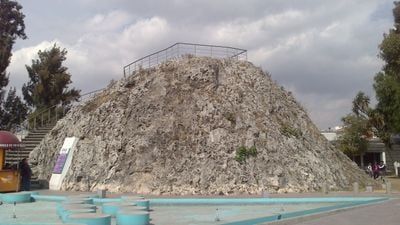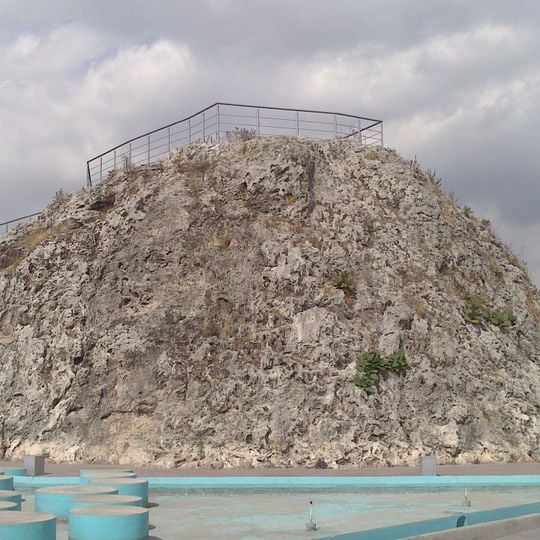
Cuexcomate, Inactive geyser in Puebla, Mexico.
Cuexcomate is an inactive cone-shaped geyser near Puebla that rises approximately 13 meters above ground with a diameter of about 23 meters. The central opening descends several meters below the surface, revealing the depth of this geothermal formation.
This structure formed before the Popocatépetl volcano eruption in 1064, when hot springs circulated mineral-rich water through limestone layers. Over centuries, continuous mineral deposits gradually built the distinctive cone shape visible today.
The name comes from the Nahuatl word cuezcomatl, which means a large earthen storage jar, and this term directly reflects the cone shape of this geological formation. Visitors can immediately grasp this connection when they see how the structure resembles a giant vessel.
Visitors can explore the interior through a metal spiral staircase leading to an observation platform. The site is generally open during standard daytime hours, providing comfortable viewing conditions.
The structure consists of 99 percent calcite deposits rather than the silica material typically found in most other geysers worldwide. This makes it chemically and mineralogically different from the vast majority of known geothermal formations of this type.
The community of curious travelers
AroundUs brings together thousands of curated places, local tips, and hidden gems, enriched daily by 91,854 contributors worldwide.