Great Blue Hole

Log in to your account

AroundUs is a community-driven map of interesting places, built by curious explorers like you. It grows with every review, story, and photo you share.
Connect to save your favorite spots, contribute locations, and create personalized routes.
By continuing, you accept our Terms and Conditions and our Privacy Policy
Add to collection
Map
Suggest a change
Share

Great Blue Hole, Marine sinkhole at Lighthouse Reef, Belize

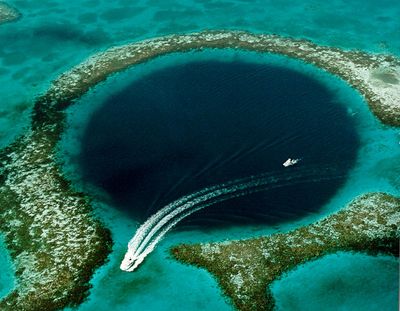
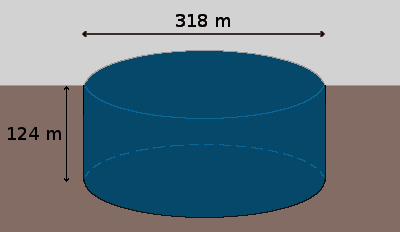
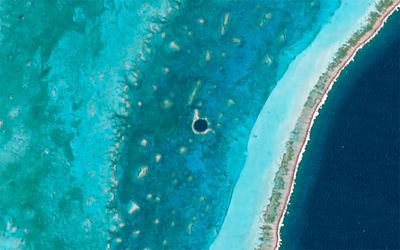
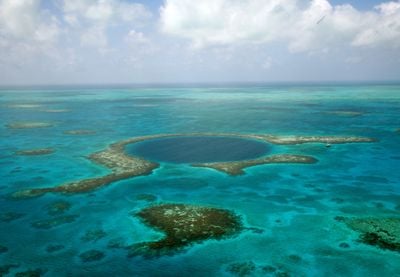
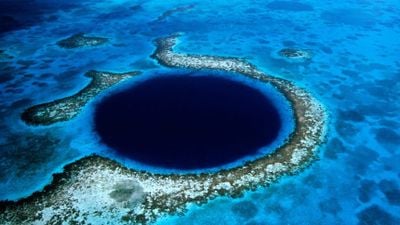
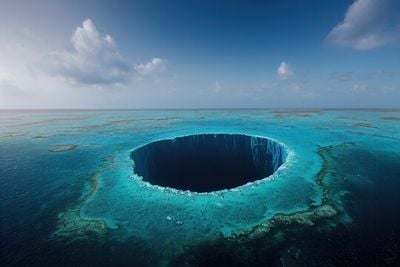
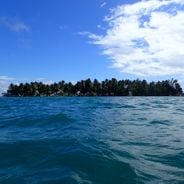
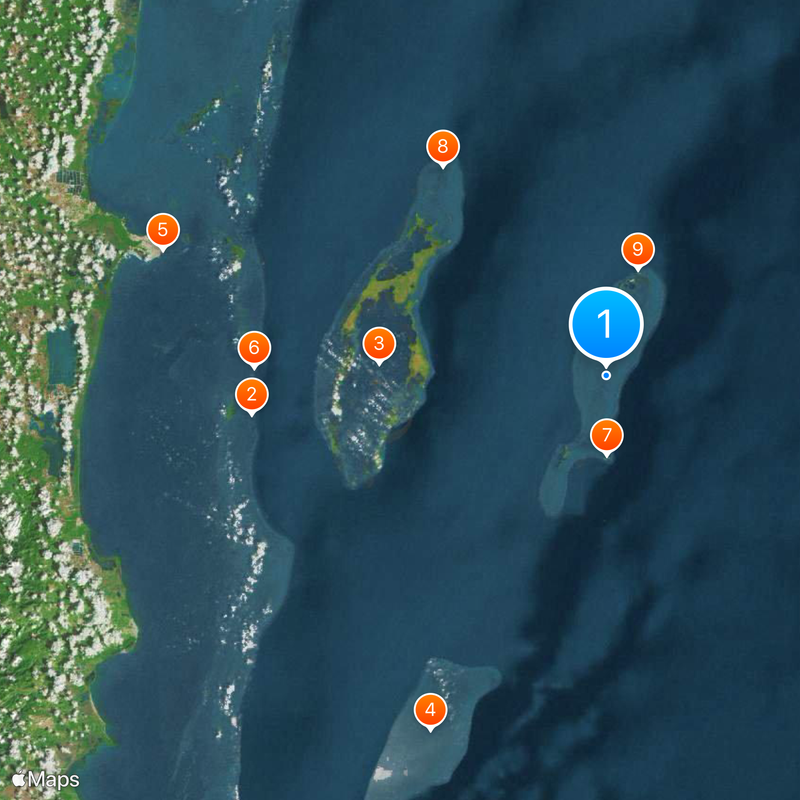
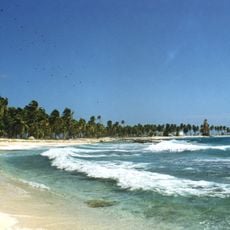
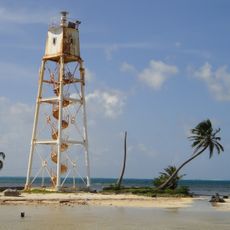
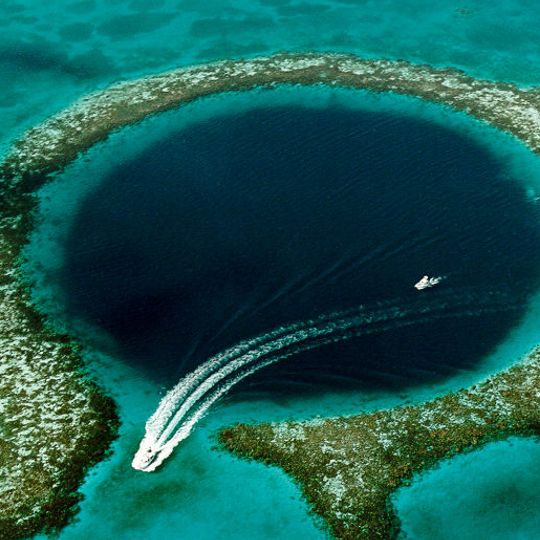
The Grand Trou Bleu is a marine sinkhole at Lighthouse Reef off the coast of Belize. The formation creates a nearly perfect circle in the ocean with a diameter of 300 meters (984 feet) and reaches depths of 123 meters (404 feet) below the water surface.

The geological structure formed during the last ice age when lower sea levels allowed limestone caves to develop. These cave systems became flooded around twelve thousand years ago as glaciers melted and sea levels rose, causing the cave roof to collapse and creating the opening visible today.

Divers from around the globe visit this site for its importance in marine research and for the many documentaries filmed about the reef. Local captains and dive instructors often share stories about past expeditions and pass on their knowledge of the geological features to visitors.

Diving expeditions typically include one descent into the formation combined with two additional dives at nearby reef areas within Lighthouse Reef, departing from mainland Belize. The boat journey takes several hours and visitors require advanced diving certifications as currents and depth demand technical skills.

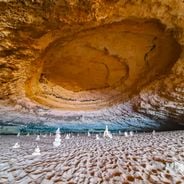
Reef sharks, large groupers, and Caribbean reef sharks inhabit the upper water layers while the underwater cave walls are lined with ancient stalagmites. These mineral formations grow at various angles and document several geological periods when the cave remained dry and dripstone accumulated.

Location: Belize District

Part of: Belize Barrier Reef

Address: Belize

Opening Hours: 24/7

GPS coordinates: 17.31556,-87.53444

Latest update: December 2, 2025 20:11

Unusual natural wonders and geological formations worldwide

This collection presents extraordinary natural phenomena and geological formations across all continents, from salt flats and volcanic crater fields to underground cave systems and landscapes shaped by mineral deposits. The featured sites display rare geological processes: moving stones leave mysterious tracks across California desert playas, methane gas feeds flames in a Turkmenistan crater for decades, and thermal springs create white travertine terraces in the Turkish countryside. Coral reefs form circular structures off the coast of Belize, while chemical reactions turn lakes pink in Australia and rivers brilliant colors in Colombia. The geological features include hexagonal basalt columns along the Northern Irish coast, conical limestone hills on Philippine islands, and mushroom shaped sandstone formations in Utah. Caves in New Zealand house thousands of bioluminescent larvae, while one of the world's largest caverns lies beneath Vietnamese mountains. Locations range from a geyser studded desert basin in Nevada to red algae carpets along Chinese shores to isolated islands off the Yemeni coast with endemic flora. This collection encompasses both ancient archaeological puzzles like stone jars in Laos and ground drawings in Peru, as well as natural optical illusions such as apparent underwater cascades off Mauritius.

Colorful landmarks around the world

Earth displays its color range at numerous sites, from geological formations to human-built environments. The selection includes locations on six continents, where natural processes or cultural traditions have resulted in prominent visual displays. The Danxia mountains in China's Gansu province show layered sedimentary rock formations in reds, oranges and yellows, while Arizona's Painted Desert derives its colors from iron oxides and other minerals. Yellowstone's Grand Prismatic Spring owes its concentric bands of color to heat-loving bacteria that thrive in different temperature zones of the water. The Great Blue Hole off the coast of Belize reaches a depth of 407 feet (124 meters), providing a deep blue contrast to the surrounding turquoise shallows. Various communities have marked their built environment with distinctive color palettes. Chefchaouen in Morocco's Rif Mountains displays blue walls throughout its medina. Jodhpur in Rajasthan uses blue paint that originally marked Brahmin residences. Cape Town's Bo-Kaap presents houses in yellows, pinks, greens and blues, while Buenos Aires' La Boca neighborhood has corrugated metal facades in bright colors. Copenhagen's Nyhavn shows 17th and 18th century townhouses along the canal in reds, oranges, yellows and other hues. Scarborough's beach huts on the English coast offer a smaller scale of residential color. Water features contribute to the variety. China's Jiuzhaigou lakes display blues and greens due to calcium carbonate and algae. Tanzania's Lake Natron turns red to pink because of microorganisms living in its alkaline water. Pena Palace on a hilltop near Sintra, Portugal, combines yellow and red facades. Copacabana on Bolivia's Lake Titicaca offers whitewashed buildings with colorful accents. Hitsujiyama Park in Chichibu presents fields of phlox in pinks, whites and purples, while Kitakyushu's Kawachi Fuji Gardens feature wisteria tunnels. Even Longyearbyen on Svalbard displays colored wooden houses against Arctic landscapes.

Unusual places around the world: abandoned sites, mysterious locations, natural phenomena

This collection brings together locations that challenge the norms of conventional tourism. It offers the chance to discover places where nature, history, and human activities have created astonishing sites: a complex of 732 unfinished villas in Turkey, a Mexican island where hundreds of dolls are hung in trees, a Canadian lake with mineral-formed multicolored basins, and a Polish forest of 400 pines with mysteriously bent trunks facing north. The route also includes unique human-made creations, such as an art installation representing an isolated Prada store in the Texas desert, or the Japanese village of Nagoro where an artist populated the streets with 350 dolls after the residents left. Geological phenomena are also featured, including Darvaza crater in Turkmenistan, which has been burning continuously since 1971, the Great Blue Hole in Belize, a 124-meter-deep underwater cavity, and Colombia’s Caño Cristales river that changes color to red, yellow, and green from July to November. These destinations provide a different perspective on our planet and invite exploration of lesser-known facets of our world.

Discover hidden treasures of the world

This collection leads to places that remain outside standard tourist circuits. The selection includes natural landscapes and cultural sites that receive limited attention from international visitors. From the salt flats of Bolivia to ancient ruins in Turkish mountain terrain and the ice formations of Lake Baikal, the collection provides access to less frequented regions. Natural phenomena include the Benagil Cave along Portugal's Algarve coast, the Great Blue Hole off Belize, and the sandstone formations of The Wave in Arizona. Cultural sites such as Quinta da Regaleira near Lisbon, the abandoned nitrate town of Humberstone in Chile, and the fortified Berber village of Ait Benhaddou in Morocco show historical building methods and past ways of life. The Meteora monasteries in Greece and the Waitomo glowworm caves in New Zealand demonstrate the connection between human settlement and natural environment. The locations span all continents and climate zones. They range from tropical regions like the turquoise river at Hinatuan in the Philippines, through temperate zones like the Cinchado rock formation on Tenerife, to remote areas such as Pangong Lake in Indian Ladakh and the limestone pinnacles of Tsingy de Bemaraha in Madagascar. The collection allows travelers to experience regional characteristics without commercial tourism infrastructure.

Satellite images showing incredible locations seen from the sky

Satellite imagery has transformed how we view remote locations on Earth, offering perspectives on places that are often invisible or difficult to reach from ground level. This collection presents natural formations, artificial structures and historical sites from an aerial vantage point. From geological features like the circular Richat Structure in Mauritania's desert to ancient geoglyphs and modern engineering achievements, these images provide a distinct view of our planet's diversity. Locations documented include the geometric Nazca Lines in Peru, the pyramid structure of El Castillo in Mexico's Yucatán Peninsula and the Badlands Guardian in Alberta, a natural rock formation that resembles a head wearing headphones when seen from above. The collection also features Palm Jumeirah in Dubai, an artificial archipelago shaped like a palm tree, the vivid blue potash evaporation ponds in Utah, the pink waters of Lake Hillier in Western Australia and the volcanic island of Surtsey off Iceland. Additional examples include the Atacama Giant in Chile, a prehistoric geoglyph, the heart shaped Galesnjak island off Croatia's coast and the ship graveyard of the former Aral Sea in Uzbekistan, which documents the ecological consequences of human intervention.

Remarkable Sites of Belize

Belize protects over 300 miles of the second largest barrier reef in the Western Hemisphere and a substantial number of pre-Columbian Maya sites, many located deep within rainforests. The country combines marine protected areas, archaeological remains, and extensive nature reserves within a relatively compact territory. Visitors can explore the Great Blue Hole at Lighthouse Reef, a circular sinkhole roughly 1,000 feet (305 meters) across and 410 feet (125 meters) deep, one day and walk through the ruins of Caracol the next, the country's largest Maya site with pyramids rising over 140 feet (43 meters). The islands of Ambergris Caye and Caye Caulker provide direct access to the reef and stretches of sandy shoreline. The Cockscomb Basin Wildlife Sanctuary preserves approximately 150 square miles (390 square kilometers) of rainforest as a protected area for jaguars and other mammals. Underwater protected areas like Hol Chan Marine Reserve and Turneffe Atoll Marine Reserve safeguard coral gardens, seagrass beds, and mangrove forests that support marine life. Archaeological sites such as Xunantunich, Lamanai, and Altun Ha showcase different building styles and periods of Maya civilization. Actun Tunichil Muknal cave combines geological formations with archaeological artifacts and is accessed by wading through underground rivers. The Mountain Pine Ridge Forest Reserve offers pine forests, waterfalls, and limestone formations in the western highlands.

Reviews

Visited this place? Tap the stars to rate it and share your experience / photos with the community! Try now! You can cancel it anytime.

« Great Blue Hole - Marine sinkhole at Lighthouse Reef, Belize » is provided by Around Us (aroundus.com). Images and texts are derived from Wikimedia project under a Creative Commons license. You are allowed to copy, distribute, and modify copies of this page, under the conditions set by the license, as long as this note is clearly visible.

Discover hidden gems everywhere you go!

From secret cafés to breathtaking viewpoints, skip the crowded tourist spots and find places that match your style. Our app makes it easy with voice search, smart filtering, route optimization, and insider tips from travelers worldwide. Download now for the complete mobile experience.

Around Us App Screenshot

A unique approach to discovering new places

Le Figaro

All the places worth exploring

France Info

A tailor-made excursion in just a few clicks

20 Minutes