Boca de Potrerillos, Archaeological site in Mina Municipality, Mexico
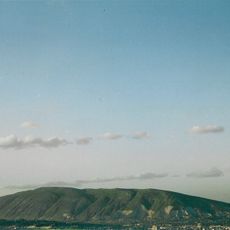
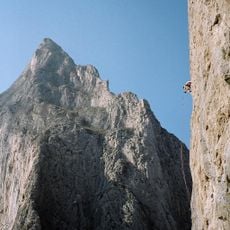
Boca de Potrerillos is an archaeological site at the mouth of the Potrerillos Canyon, between the Zorra and Antrisco hills, about 14 km from Mina, Nuevo León. Its roughly 6 km² hold three settings: an eastern alluvial fan with hundreds of pre-Hispanic ovens and scattered stone tools, a smaller western fan with similar remains, and the eastern flank of the two hills, where thousands of engraved rocks bear petroglyphs.
Evidence shows human settlement dating to around 8900 BC, with early ovens and tools discovered across the site. These findings indicate the region supported communities over extended periods, with people adapting to and using the landscape around them.
The site's name comes from the "mouth" or entrance to Potrerillos Canyon, between the Zorra and Antrisco hills, a name used since the 19th century. Colonial sources never mention the rock art, and no ethnohistorical references identify its makers; researchers such as William Breen Murray and Solveig A. Turpin have studied the engravings. Visitors can see small incised plaques interpreted as amulets bearing portable versions of the petroglyphs.
The site is located in rolling desert terrain and can be explored on foot, though the ground is uneven and rocky. Visitors should know the weather is typically dry and sunny, so planning for a day visit requires some preparation.
More than 4,000 engraved rocks are known at the site, with an estimated 8,000 to 10,000 individual images, far more than the roughly 3,000 often cited. Among the stone tools found are crescent-shaped scrapers and Clear Fork type pieces dated to around 3000 BC, plus small incised plates used as amulets.
The community of curious travelers
AroundUs brings together thousands of curated places, local tips, and hidden gems, enriched daily by 94,228 contributors worldwide.