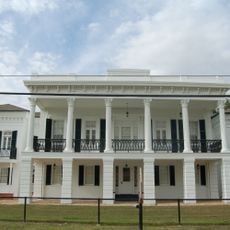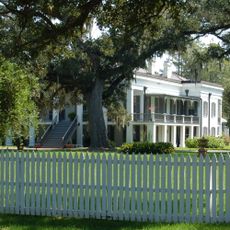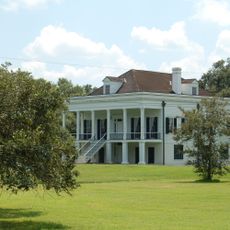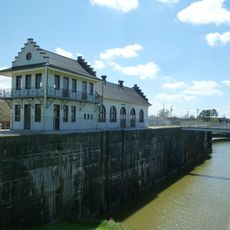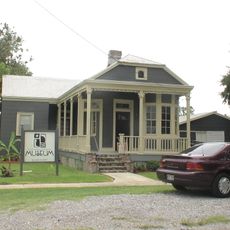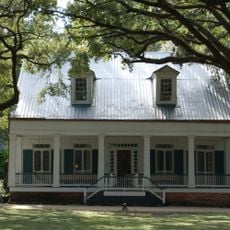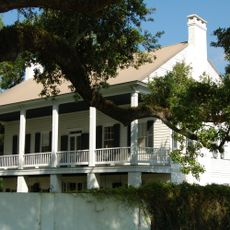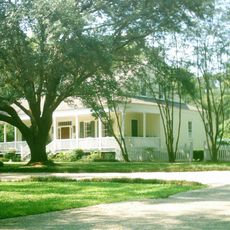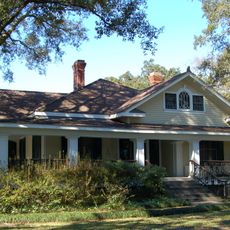
Belle Grove Plantation, Greek Revival plantation in White Castle, Louisiana, US.
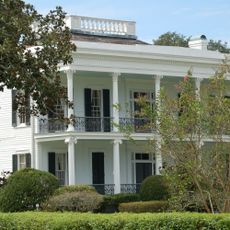
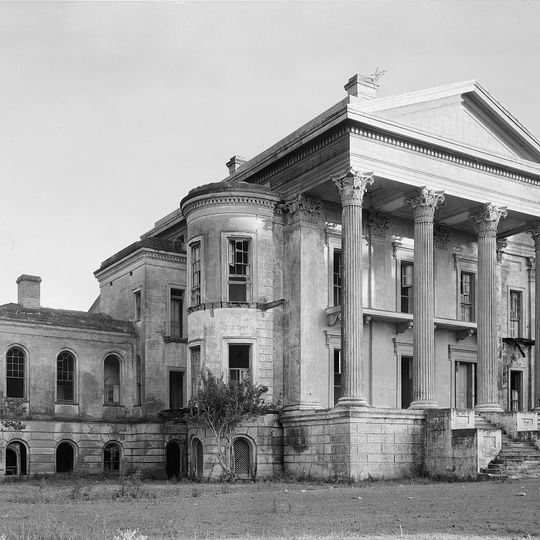
Belle Grove Plantation was a four-story mansion containing seventy-five rooms, measuring roughly 122 feet (37 meters) in width and 62 feet (19 meters) in height. The structure was defined by monumental Corinthian columns and featured intricate architectural detailing throughout.
John Andrews founded Belle Grove in the 1830s with Dr. John Phillip Read Stone as partner, taking full ownership in 1844. He built the mansion between 1852 and 1857 for $80,000, hiring New Orleans architect Henry Howard. After the Civil War he sold it in 1868 to Henry B. Ware for $12,000. A roof leak destroyed one wing, and a fire on the night of March 17, 1952 finished the house.
Belle Grove took its name from the Andrews family's estate; the plantation was worked by more than 150 enslaved people who produced over half a million pounds of sugar a year by the 1850s. John Andrews competed with his neighbour John Randolph of Nottoway, and both mansions were designed by New Orleans architect Henry Howard. Photographer Clarence John Laughlin later recorded the house in Ghosts Along the Mississippi.
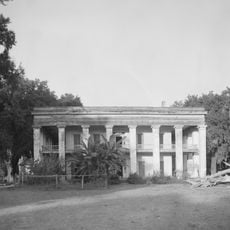
Before its destruction, the plantation was documented by the Historic American Buildings Survey through photographs and drawings, allowing researchers and visitors to study its original design. These historical records provide visual references for understanding the architectural elements that once defined the site.
Belle Grove's door knobs and keyhole guards were made of silver, and its great flight of brick steps was covered with imported marble. The house also contained a jail cell among its seventy-five rooms. Photographer Clarence John Laughlin wrote that its pillars bore Corinthian capitals six feet high.
The community of curious travelers
AroundUs brings together thousands of curated places, local tips, and hidden gems, enriched daily by 93,371 contributors worldwide.