Moundville Archaeological Site, Native American archaeological park in Moundville, Alabama, United States
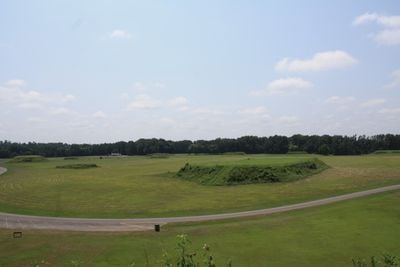
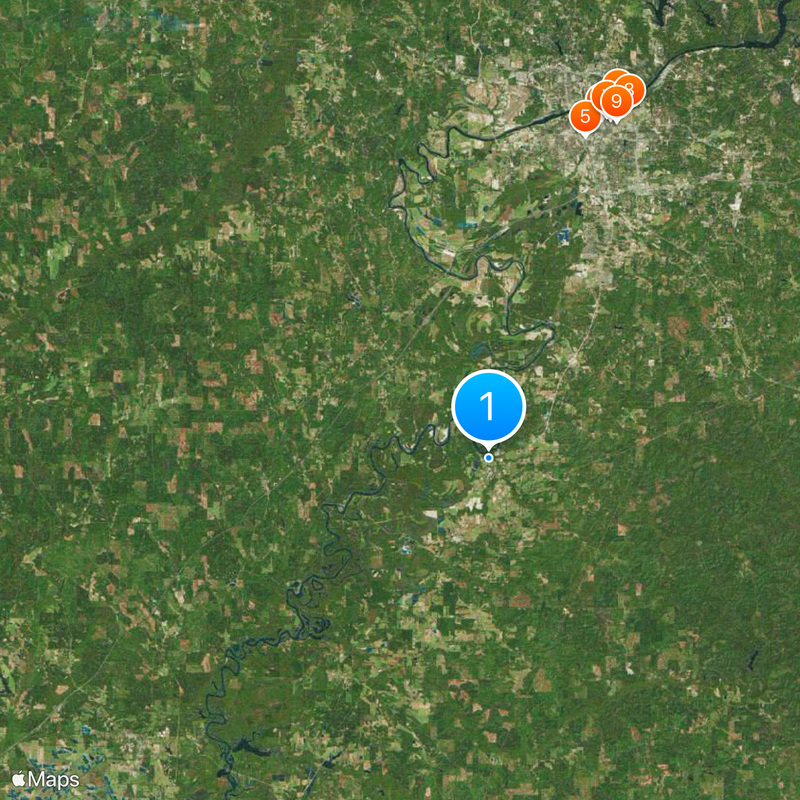
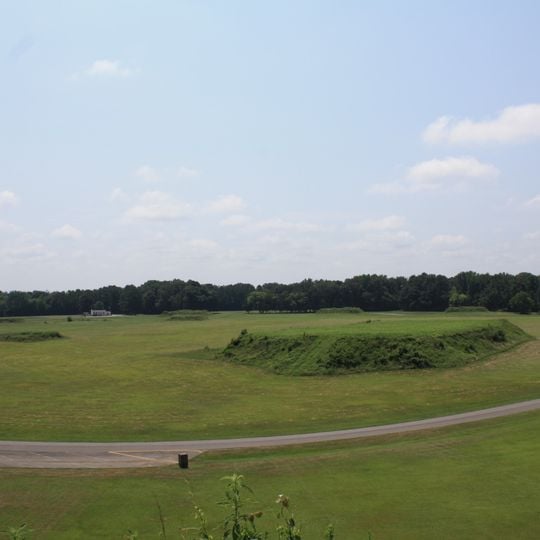
Moundville Archaeological Site is an archaeological site in Hale County, near Tuscaloosa, Alabama, with 29 earthen platform mounds around a rectangular plaza on the Black Warrior River. The largest, Mound B, is a steep pyramidal mound 58 feet (18 m) tall with two access ramps. A smaller grassy rise sits beside the main mound, and a small white building with a dark roof stands at the edge of the field.
The site emerged around 1000 and grew into one of the most important political and ceremonial centers of Mississippian culture before being largely abandoned around 1450. The inhabitants likely left the area due to resource depletion and social changes affecting the entire Mississippian system.
The name Moundville comes from the 29 earthen platform mounds that still stand around the rectangular plaza. The largest were built along the plaza's northern edge, and scholars interpret the arrangement as a map of ranked clans, with the biggest mounds for the highest-ranking groups. The park's Jones Archaeological Museum, named for geologist Walter B. Jones, displays artifacts excavated at the site.
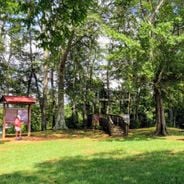
The grounds are accessible via several paved paths suitable for a walk of roughly ninety minutes that wind between the individual mounds. Visitors should wear comfortable shoes as some sections cross open grassland and can become slippery after rain.
Archaeologists found unusually large copper plates and finely worked shell ornaments in some graves, indicating long-distance trade connections reaching the Great Lakes and the Gulf Coast. These objects show that Moundville elites had access to materials sourced hundreds of miles away.
The community of curious travelers
AroundUs brings together thousands of curated places, local tips, and hidden gems, enriched daily by 93,031 contributors worldwide.