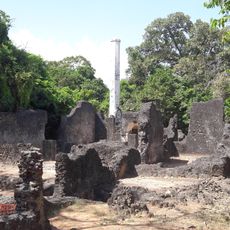
Vasco da Gama pillar, Portuguese stone pillar in Malindi, Kenya.
The Vasco da Gama pillar is a tapering limestone pillar on a low rocky promontory in Malindi, Kenya. It rises from a wider cylindrical base on a platform edged with reddish-brown stones and ends in a small stone cross. A dark horizontal seam separates shaft and base; the cream-white surface is weathered grey and brown. The cross once bore the arms of Portugal.
Vasco da Gama placed the marker between 1498 and 1499 during his voyage to India, establishing a navigational point along the Asian sea route. This installation opened Portuguese access to Indian Ocean commerce and introduced a new phase of European involvement in the region.
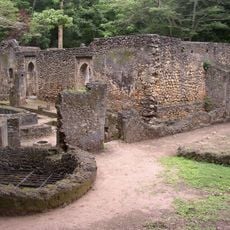
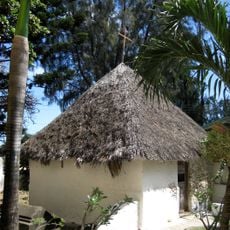
The pillar is topped by a cross of Portuguese limestone bearing the coat of arms of Portugal. Francis Xavier, visiting Malindi in 1542, described it as a large stone cross gilt all over. The site is Malindi's most visited heritage site, and a single ticket also covers the Portuguese Chapel, the House of Columns and the Heritage Complex museum.
The site sits on an elevated headland and requires walking along paved paths leading up to the monument. Information panels provide context on-site, and visitors should bring sun protection since the location is exposed.
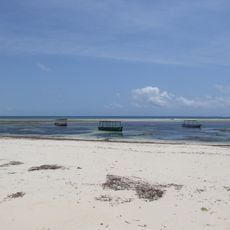
The marker has remained in its original location for over 500 years, while similar navigational monuments along the African coast have disappeared or been moved. The site also offers a wide ocean view that da Gama himself used for navigation.
The community of curious travelers
AroundUs brings together thousands of curated places, local tips, and hidden gems, enriched daily by 93,766 contributors worldwide.