Key West National Wildlife Refuge, National Wildlife Refuge in Monroe County, United States
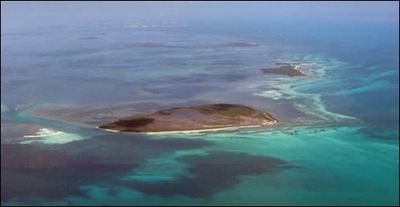
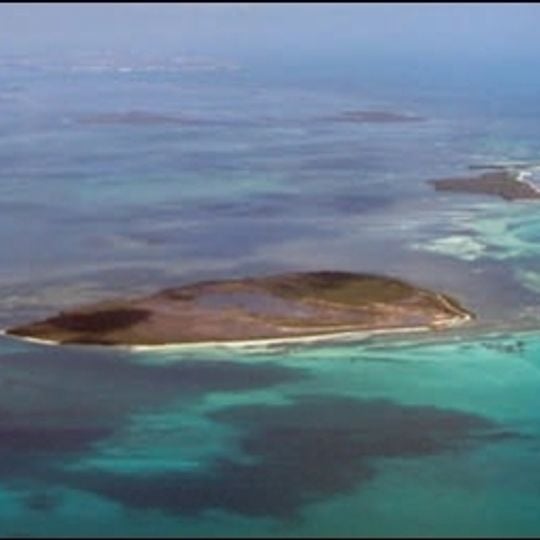
Key West National Wildlife Refuge covers 189,497 acres between Key West and the Dry Tortugas, but only 2,019 acres of land rise above sea level, spread over 26 islands of the Mule Keys and Marquesas Keys. The islands are mostly mangrove, with a few sandy beaches and dunes, salt marsh and coastal berm hammocks. The photograph shows one low, flat key covered in brown and tan vegetation, a dark patch near its left end and a thin pale sand strip along its lower edge.
President Theodore Roosevelt created this refuge in 1908 to protect birds from hunters who collected feathers for the hat trade. It ranks among the oldest federal wildlife refuges in the country, and its founding helped establish the idea of government-led conservation.
The refuge's name comes from its position just west of Key West, and its islands are reachable only by boat. Woman Key and Boca Grande Key have beach sections posted closed for sensitive habitat, while the rest, including the Marquesas Keys, stays open in daylight for wildlife observation, nature photography and environmental education.
A boat is the only way to reach the refuge since it is made up of islands and water channels with no road access. Daytime visits by kayak work well for getting close to the islands while staying within the areas open to the public.
The hawksbill sea turtle, one of the rarest sea turtles in the world, uses the refuge's beaches as one of the very few known nesting sites in the United States. The same females return to the same beaches year after year to lay their eggs.
The community of curious travelers
AroundUs brings together thousands of curated places, local tips, and hidden gems, enriched daily by 94,458 contributors worldwide.