Laguna de Leche, Natural lake in Ciego de Ávila Province, Cuba
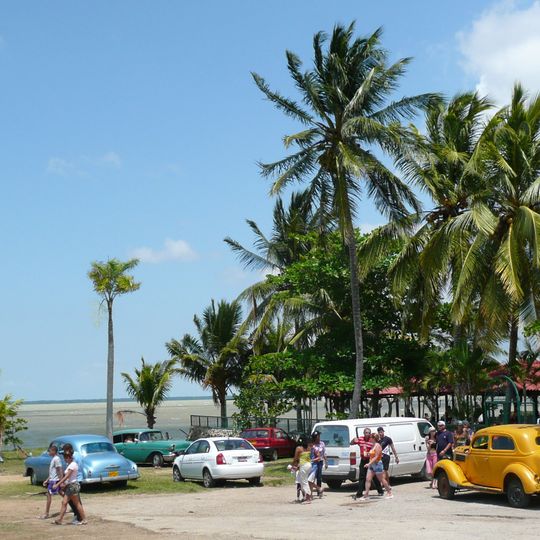
Laguna de Leche is the largest natural freshwater lake in Cuba, covering 67.2 square kilometres in the wetlands 5 km north of Morón, Ciego de Ávila Province. Its white colour comes from limestone particles released from the lake bed. The lake and its islands provide habitat for the Caribbean flamingo.
A channel was constructed in 1940 to connect the lake with the Bay of Buena Vista to enable sugar transportation. The waterway was closed in 1988 to protect the water quality of the lake.
The lake's name comes from the milky white tint that lime particles from its limestone bed give the water. The Chicola Channel, opened in 1940 and closed in 1988, let sugar from Morón reach the small port of Chicola. Caribbean flamingos nest on the lake and its islands.
The lake is best visited during the dry months when water levels are more stable and bird watching conditions are better. The southern shore area is more accessible to visitors and offers clearer views of the landscape.
The white colour comes from lime particles released from the limestone bed when movements of the sea level disturb the water table. A channel opened in 1940 to carry sugar from Morón to the port of Chicola let sea water in and the lake lost its milky tone; after the channel was closed in 1988, the colour gradually returned.
The community of curious travelers
AroundUs brings together thousands of curated places, local tips, and hidden gems, enriched daily by 94,572 contributors worldwide.