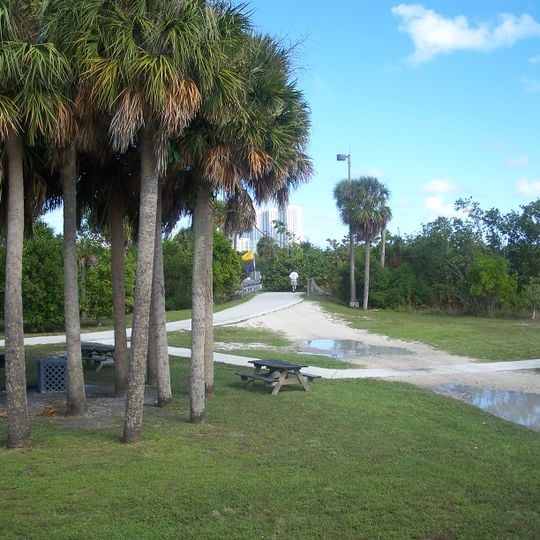
Oleta River State Park, State park in North Miami, United States.
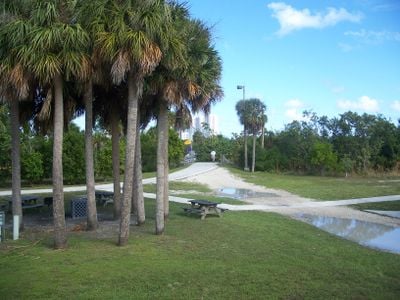
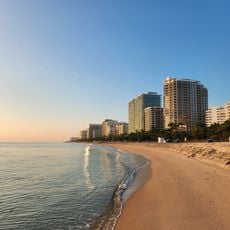
Oleta River State Park is a natural area in North Miami with mangrove forests, sandy beaches, and waterways along Biscayne Bay. The landscape shifts between dense green shorelines and open beach sections, while canals cut through the low vegetation.
The Oleta River's shores served as a campground for Tequesta Indians from about 500 B.C. U.S. troops used the waterway, which they called Big Snake Creek, in 1841 during the Second Seminole War. In 1881 Naval Captain William Hawkins Fulford ventured inland along it to what is now North Miami Beach, and in 1922 developers renamed the creek the Oleta River.
The name comes from the river that winds through the mangroves and remains visible to visitors as they paddle or walk along the trails. Anglers stand quietly along the canals while cyclists pass in small groups, often greeting each other on the narrow paths.
Boats and bikes can be rented on site, with availability depending on weather and season. The paths are mostly flat and well marked, making it easy for beginners to navigate.
The park holds one of the largest concentrations of Casuarina trees, an Australian "pine" that is invasive in Florida's state park system. Its mangrove coastline serves as a nursery for aquatic life and filters urban pollutants from coastal waters. About 15 endangered species live in the park, and the nonprofit Friends of Oleta River State Park supports its biodiversity work.
The community of curious travelers
AroundUs brings together thousands of curated places, local tips, and hidden gems, enriched daily by 93,036 contributors worldwide.