Dunlawton Plantation and Sugar Mill, 19th century plantation ruins and botanical gardens in Port Orange, Florida, US.
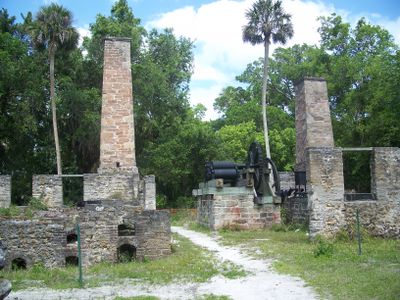
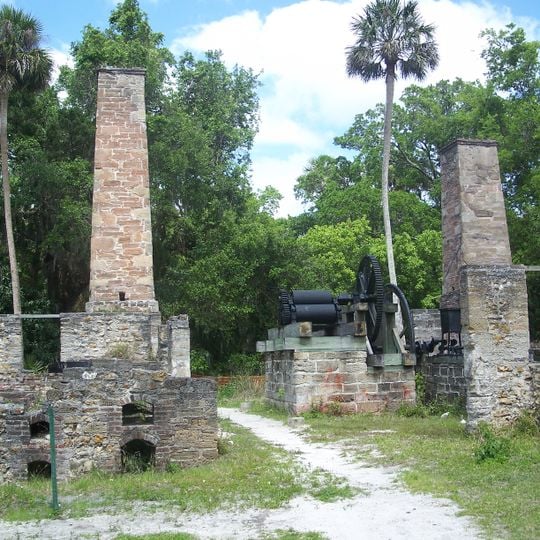
Dunlawton Plantation and Sugar Mill is a 12-acre site with gardens and preserved remains of a former sugar processing facility in Port Orange. Shaded by old oak trees and crisscrossed by winding paths, it features diverse plantings alongside the mill's structural remnants.
The site was established in 1804 for sugar processing operations but was destroyed during the Second Seminole War in the early 1800s. Later it served other purposes before becoming the gardens and historical space visitors see today.
The name Dunlawton combines Sarah Anderson's maiden name, Dunn, with that of the land dealers Charles and Joseph Lawton, who sold her the property in 1832. The gardens hold interpretive signs about the enclosed ruins, concrete dinosaurs and a giant ground sloth, a gazebo, and plantings of grasses, flowers, bushes and native plants beneath oaks.
The ruins stand at 950 Old Sugar Mill Road in Port Orange, reached from the Halifax River side of town. The mill remnants are enclosed and viewed through fencing, with interpretive signs explaining the boiling kettles and cane processing. Paths wind beneath a canopy of oak trees past the gazebo and plantings of native grasses and flowers.
The gardens hold large concrete sculptures of dinosaurs and a giant ground sloth, placed among the mill ruins and native plantings under oak trees. Interpretive signs explain the enclosed remains of the sugar works. The site was listed on the National Register of Historic Places on August 28, 1973, as Dunlawton Plantation-Sugar Mill Ruins.
The community of curious travelers
AroundUs brings together thousands of curated places, local tips, and hidden gems, enriched daily by 92,762 contributors worldwide.