Free Public Library of Petaluma, Historical museum in Petaluma, United States
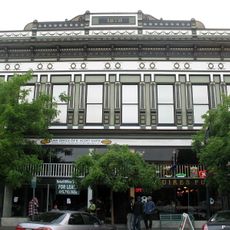
The Free Public Library of Petaluma is a Classical Revival building of quarried Stony Point stone, constructed in 1904 to Brainerd Jones's design. Its two-story entrance carries pediments and columns; inside are a vaulted ceiling, wood paneling, fan-glass and round leaded-glass windows, and a leaded-glass dome. It now houses the Petaluma Historical Library and Museum.
The building opened in 1906 as a Carnegie library funded by Andrew Carnegie and local donations. It was transformed into a museum in 1976 to preserve and share the region's heritage.
The museum's displays cover the Miwok people and the poultry and dairy industries that shaped Petaluma. The Hoppy Hopkins Memorial Research Library, named for local historian Hoppy Hopkins (1921-2003), holds maps, blueprints, newspapers, city directories and yearbooks for genealogical and architectural research.
Wheelchair access is available in certain areas, so check ahead to see which sections you can visit. The research resources work well for historical study, so bring time if you want to look through documents or genealogical materials.
The leaded-glass dome inside is described as the largest free-standing one in Northern California. On the corner lot at Fourth and B streets, three trees are registered as Heritage or landmark trees: a Giant Sequoia, a California Live Oak and a Bunya-Bunya. The city bought the land from civic leader Addie Atwater, as Carnegie required the city to provide the site.
The community of curious travelers
AroundUs brings together thousands of curated places, local tips, and hidden gems, enriched daily by 94,697 contributors worldwide.