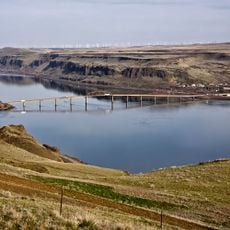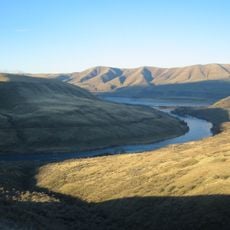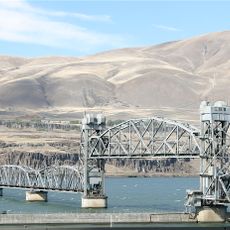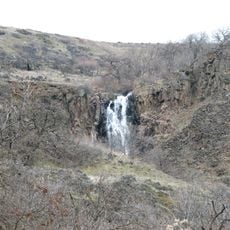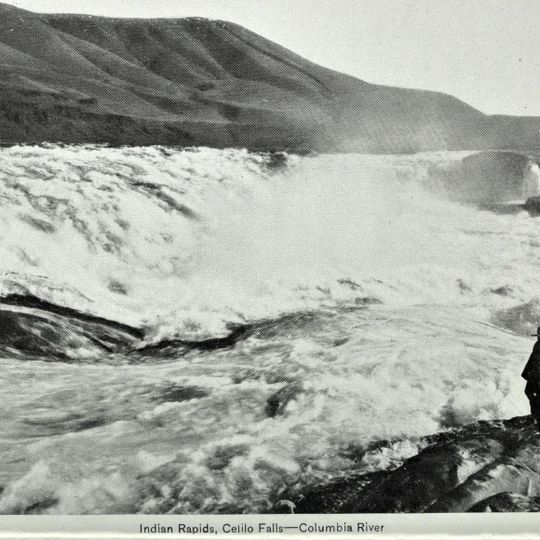
Celilo Falls, Native American fishing area at Columbia River, Oregon, United States
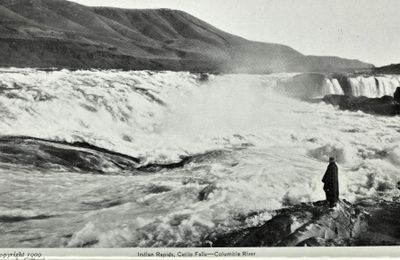
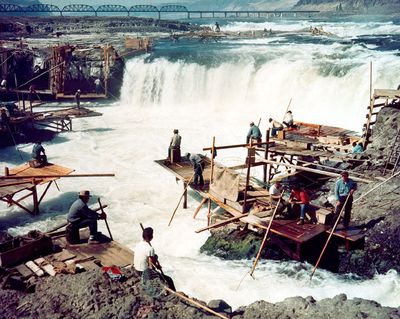
Celilo Falls was a fishing area on the Columbia River in Oregon consisting of three sections: Horseshoe Falls, a deep eddy called Cul-de-Sac, and the main river channel through basalt narrows. People built platforms extending over the water and used ropes for safety while catching salmon, particularly during migration seasons.
Indigenous communities continuously inhabited this location for approximately 15,000 years until the construction of The Dalles Dam in 1957. The dam's construction flooded the historic fishing grounds and ended one of the longest human settlement traditions in North America.
The site was known as Wyam in native languages and functioned as a major gathering place where people came together to fish for salmon and exchange goods. The rock formations and flowing water created the backbone of this social hub that connected generations of people.
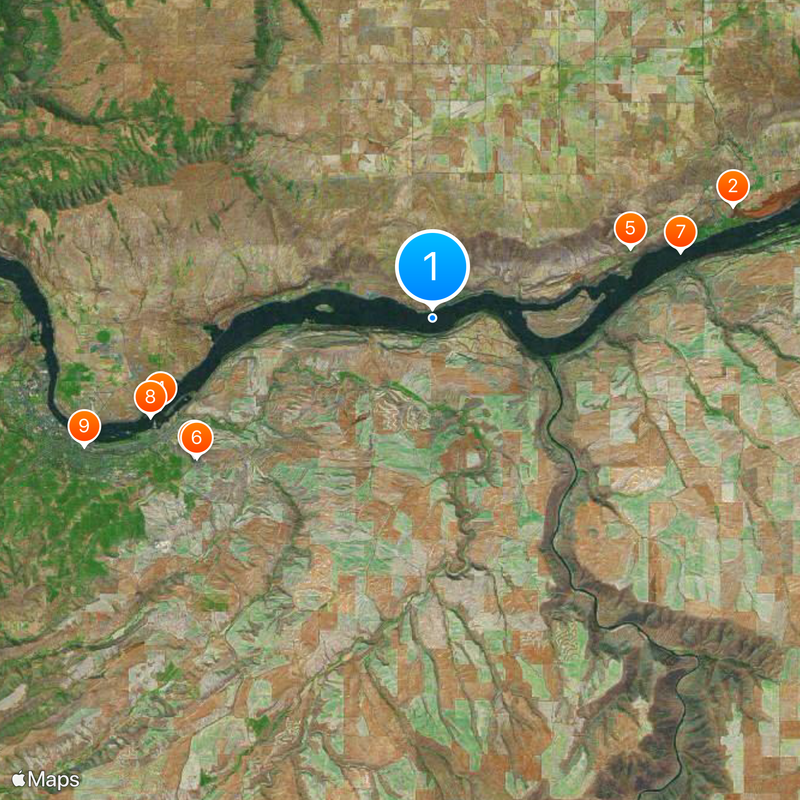
The location sits on the Columbia River where water currents become particularly strong during salmon migration and rock formations limit fishing spots. Visitors should know that the area is now submerged underwater and can only be explored historically, with viewpoints available along the shoreline.
During spring flooding periods, the volume of water flowing through this location exceeded the current flow rate of Niagara Falls. This extraordinary water power made the area one of the most productive salmon fishing grounds on the entire continent.
The community of curious travelers
AroundUs brings together thousands of curated places, local tips, and hidden gems, enriched daily by 60,000 contributors worldwide.