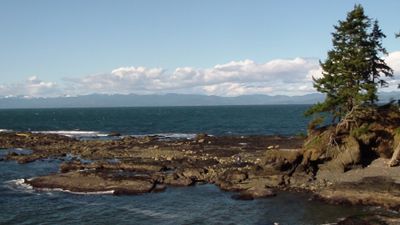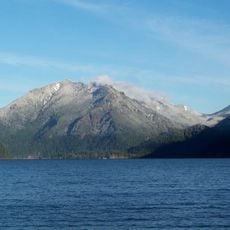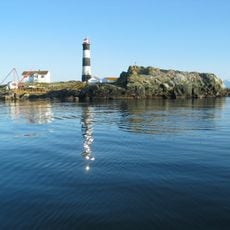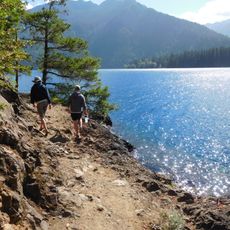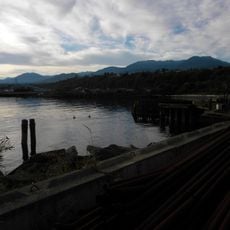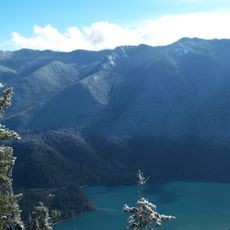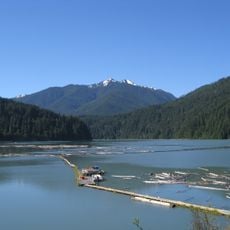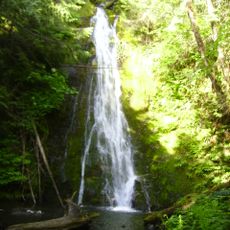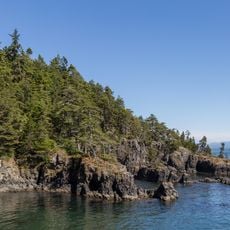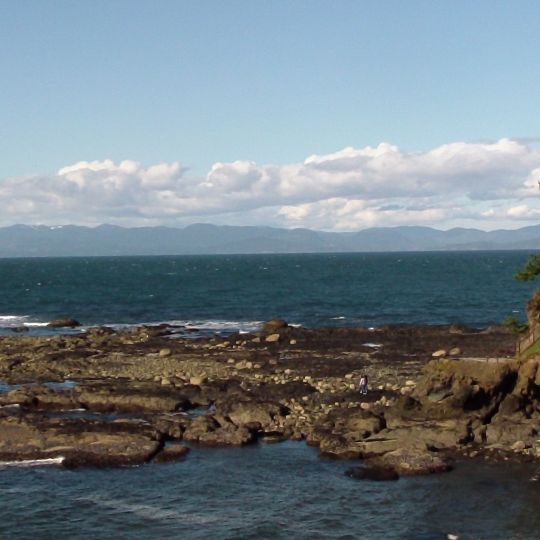
Tongue Point, Marine outcrop in Salt Creek Recreation Area, Washington.
Tongue Point is a rocky peninsula that juts into the Strait of Juan de Fuca, defined by natural tidal pools along its shoreline. The landscape features rock formations that expose habitats for sea stars, mussels, and other marine creatures when the tide recedes.
The Lewis and Clark Expedition documented this location in 1805, with Meriwether Lewis recording its distinctive projection into the shallow waters. The point represents an important reference in early exploration of the Pacific coast region.
The location functions as a research and learning site for the local community to understand the marine ecosystems of the Pacific coast. People visit regularly to observe and document the diversity of sea life found here.
Plan your visit during low tide to safely explore the tidal pools and observe the marine life living there. Access depends on tidal conditions, so checking tide times before you go helps you make the most of your visit.
A natural rock arch near the point creates a passage through the rock formation that becomes accessible only under specific tidal conditions. This hidden feature makes each visit a different experience depending on when the tides occur.
The community of curious travelers
AroundUs brings together thousands of curated places, local tips, and hidden gems, enriched daily by 91,356 contributors worldwide.