Canyon de Chelly National Monument, Archaeological site and national monument in Apache County, Arizona.
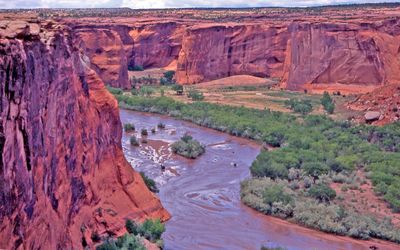
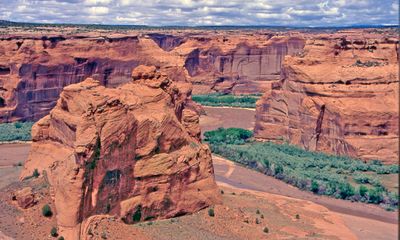
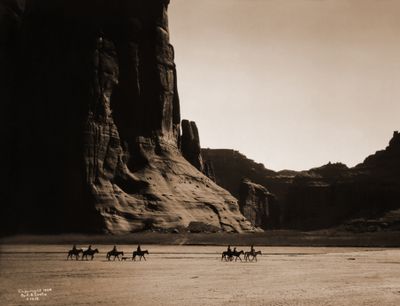
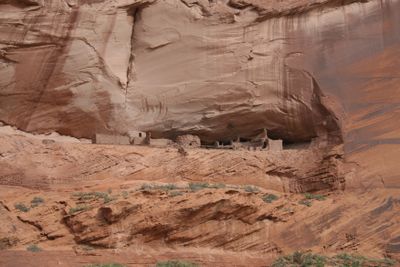
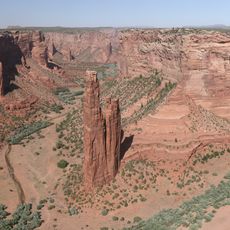
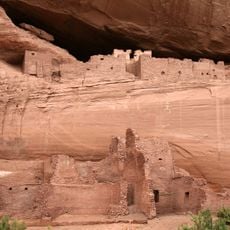
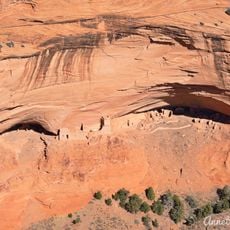
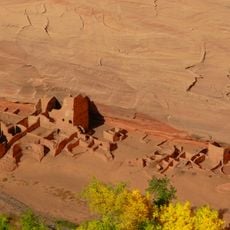
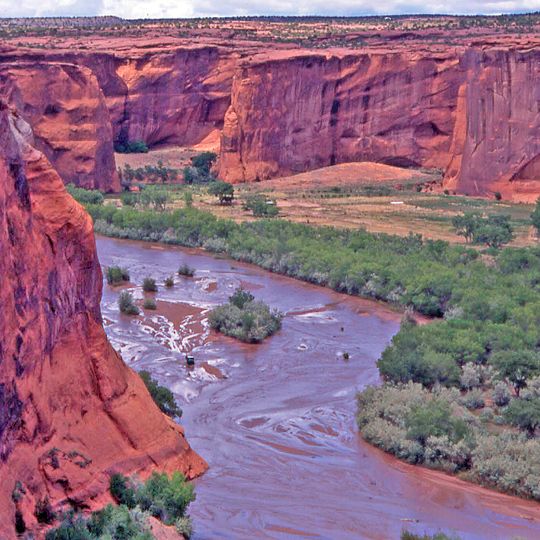
Canyon de Chelly is a national monument in northeastern Arizona whose three canyons—de Chelly, del Muerto and Monument—were cut by streams from the Chuska Mountains. The steep sandstone walls enclose a muddy river, sandy banks and green shrubs, while the rim is flat and scrub-edged. Cliff dwellings such as White House and Mummy Cave sit in alcoves, and a massive butte with stepped, knobby forms rises near the canyon mouth.
Human occupation spans nearly 5,000 years, from Archaic hunter-gatherers to Basketmaker farmers who settled around 200 BCE. Puebloans built stone villages such as White House and Mummy Cave between 750 and 1300, then left during a drought in the 1200s. Hopi returned seasonally until about 1700, when the Navajo arrived. In 1805, Spanish troops under Antonio Narbona killed 115 Navajo at Massacre Cave. The monument was established on April 1, 1931.
The name Chelly comes from the Navajo Tséyiʼ, "inside the rock" (tsé, rock, plus yiʼ, inside); Spanish speakers pronounced it de Chelly, and English speakers later took it for French and said də-SHAY. About 40 Navajo families still live in the monument, farming and raising livestock in the canyon bottoms.
The easiest way to explore is along South Rim Drive, which has seven overlooks offering views of the canyons from above. For a closer experience, you can book a tour with an authorized Navajo guide who can take you down into the canyons to see the sites up close.
The cliff dwellings are spread across all three canyons rather than concentrated in one area, showing how the ancient people adapted to different parts of the landscape. Some structures are so tucked into the canyon walls that they only become visible when walking through the canyons with a guide.
The community of curious travelers
AroundUs brings together thousands of curated places, local tips, and hidden gems, enriched daily by 93,672 contributors worldwide.