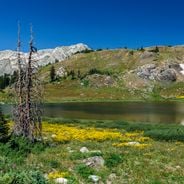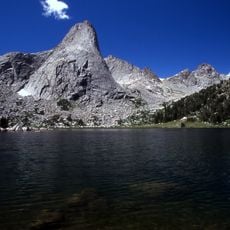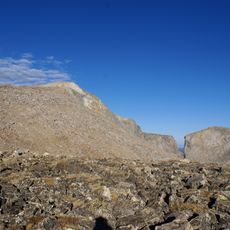
Sinks Canyon State Park, State park near Lander, Wyoming.
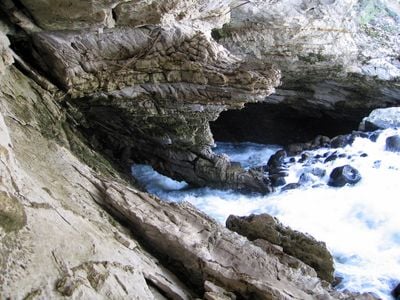
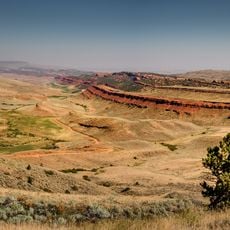
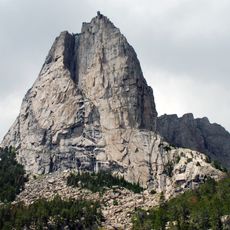
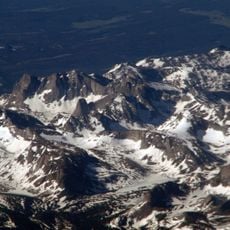
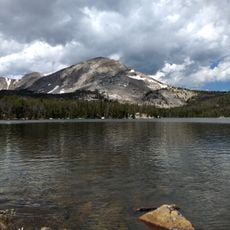
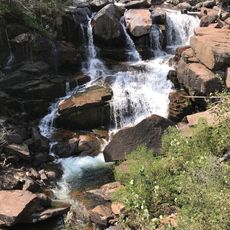
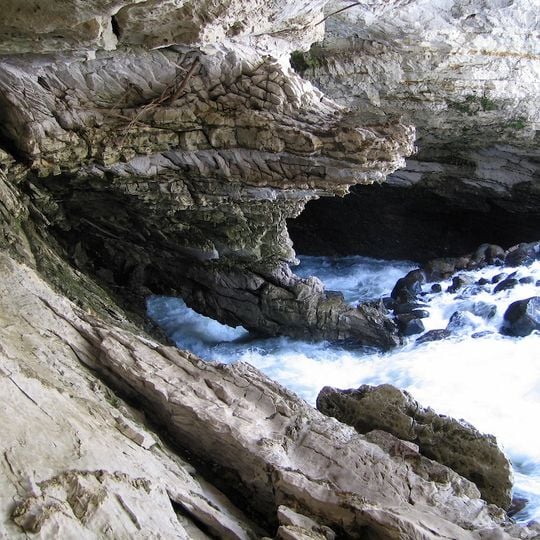
Sinks Canyon State Park lies in a canyon of the Wind River Range where the Middle Fork of the Popo Agie River drops into a limestone opening called the Sinks and reappears a quarter-mile downstream at the Rise. The canyon exposes layered Madison Limestone as cliffs and sloping ledges, with whitewater surging through a dark opening beneath an overhang. The park has hiking trails, picnic areas and three campgrounds.
Archaeological digs in the canyon have uncovered hearths and tools carbon-dated to the last ice age. In the late 1910s the Sinks Canyon Hydro Power Company built a 9-foot-high, 60-foot-wide stone-concrete dam upstream, feeding a powerhouse at the Rise through a 3,145-foot riveted-steel pipeline; the plant ran until about 1954. The state bought large canyon portions in 1939 and 1953, and the park was created in 1970, with the bill signed in 1971.
The Crow name "Popo Agie" (pronounced po-PO-shuh) is taken to mean "gurgling river," after the sound the Middle Fork makes as it drops into the Sinks. Native tribes knew the sinkholes for generations before the first white trappers appeared in the early 19th century. Dye tests in 1983 by the USGS and park staff finally traced the water's underground route.
The park offers easily accessible hiking trails of varying difficulty and picnic areas with basic facilities. The heated yurts provide comfortable overnight accommodations and appeal to visitors who want to explore the area without traditional tent camping.
At a spot called The Sinks, the river disappears completely into a limestone cavern and resurfaces about 400 meters downstream at a pool named The Rise. This natural phenomenon draws visitors fascinated by how water shapes rock over time.
The community of curious travelers
AroundUs brings together thousands of curated places, local tips, and hidden gems, enriched daily by 93,803 contributors worldwide.