Almond Formation, Geological formation in Wyoming and Colorado, United States
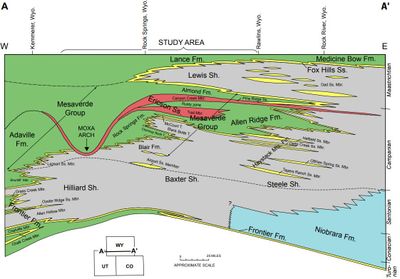
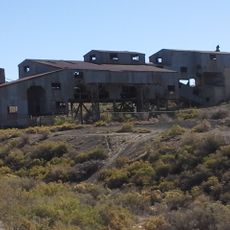
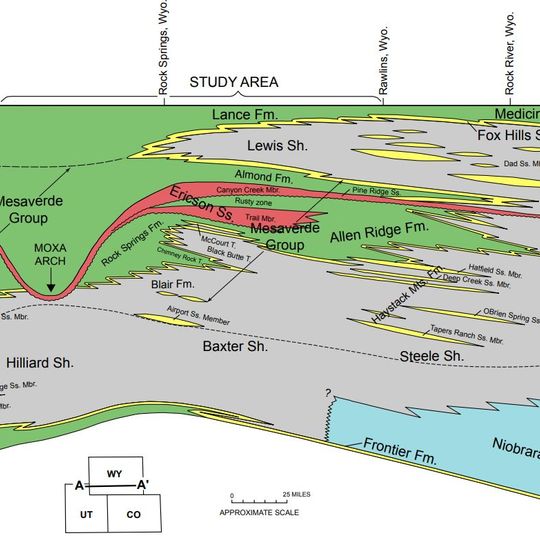
The Almond Formation is a Late Cretaceous geological layer spanning southwestern Wyoming and northern Colorado, composed of sandstones and shales in varying colors. The formation also holds significant coal and mineral deposits that have been extracted from the region.
This layer formed during the Late Cretaceous, roughly 74 to 71 million years ago, when the region lay beneath a vast inland sea. The retreat patterns of this sea left behind the different rock types visible today.
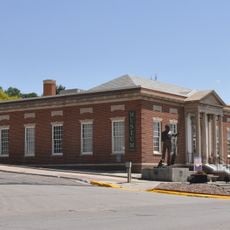
Fossils discovered here reveal what animals lived in this region millions of years ago. Local museums display these remains, helping visitors understand the prehistoric life that once existed in the area.
The best way to see this formation is to drive along regional highways or visit museums displaying rock samples and fossils from this period. Many geological sites are easily accessible, but check in advance for specific locations and visitor hours.
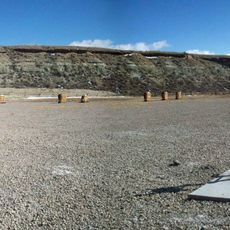
The formation stands out for its transition patterns showing how the environment shifted from ocean to drier land. These shifts are clearly visible in the different layers and tell the story of these geological changes.
The community of curious travelers
AroundUs brings together thousands of curated places, local tips, and hidden gems, enriched daily by 92,728 contributors worldwide.