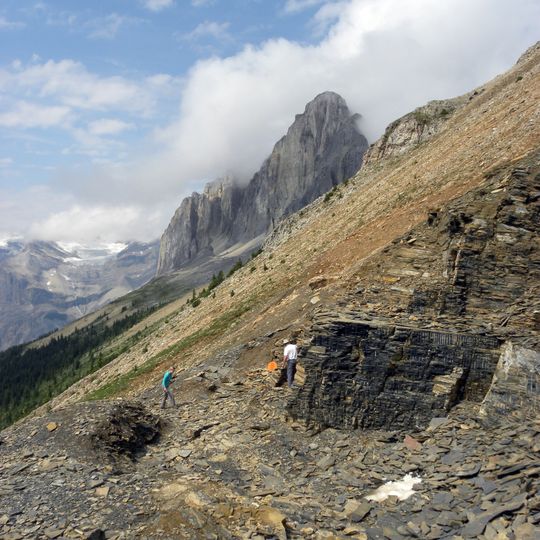
Stephen Formation, Geological formation in British Columbia, Canada
Stephen Formation is a geological layer made of shale mixed with limestone and siltstone spanning across the Canadian Rockies in British Columbia and Alberta. The deposits vary in thickness and composition depending on whether they formed in shallow waters or in deeper areas beyond the Cathedral escarpment.
This formation developed during the Middle Cambrian period, roughly 513 to 497 million years ago, when sediments accumulated in ancient marine settings. That era marked a time when ocean life was expanding and diversifying rapidly.
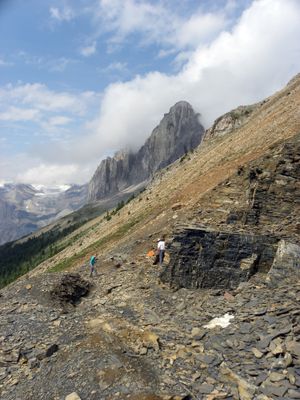
The trilobite beds on Mount Stephen were the first Burgess Shale locality to be found, and the Walcott Quarry, at the base of the Walcott Quarry member, is the best known of more than a dozen fossil sites in the formation. The Lower Trilobite Beds lie lower on the mountainside yet stratigraphically higher than the Upper Trilobite Beds. Fossils also come from the thin Stephen Formation near Stanley Glacier, about 40 km from the main sites.
The formation can be viewed at several quarry sites and outcrops along mountain routes in the region, particularly during warmer months. Plan visits when access roads are clear and conditions allow for safe exploration of these geological exposures.
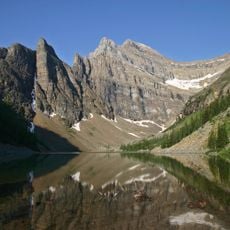
The Walcott Quarry yields its fossils because it sits right at the edge of the Cambrian Cathedral cliff; beds farther from the reef were squeezed by tectonic compression, producing a cleavage that splits the rock perpendicular to the fossils and makes them impossible to prepare.
The community of curious travelers
AroundUs brings together thousands of curated places, local tips, and hidden gems, enriched daily by 95,301 contributors worldwide.