Tower Fall, Waterfall in Yellowstone National Park, United States
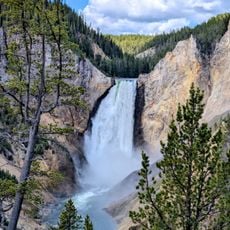
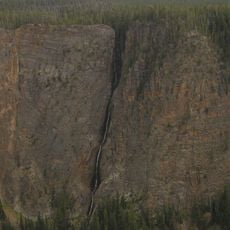
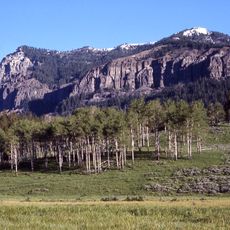
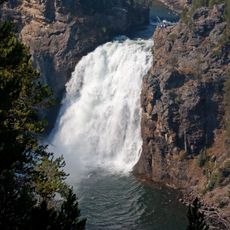
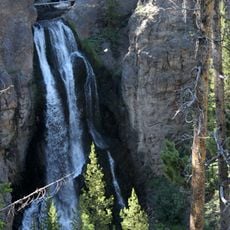
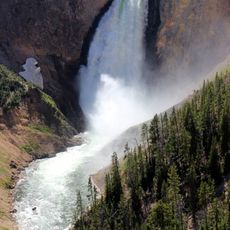
Tower Fall is a waterfall on Tower Creek in northeastern Yellowstone National Park, Wyoming, plunging 132 feet (40 m) about 1,000 yards upstream of the creek's confluence with the Yellowstone River. At its crest the stream has cut through amygdaloid rock, leaving friable spires 50 to 100 feet high, several standing on the very brink of the fall.
The Cook–Folsom–Peterson Expedition spent September 15–16, 1869 in the Tower Fall area, and the Washburn–Langford–Doane Expedition camped and explored here in August 1870. Samuel Hauser, a Washburn party member, named the falls in his diary on August 27, 1870, counting eight spires above them. Gustavus C. Doane described the fall in his 1871 report, and Thomas Moran's 1871 painting supported the creation of Yellowstone National Park in 1872. The U.S. Geological Survey changed the name to the singular Tower Fall in 1928.
Samuel T. Hauser, a member of the Washburn-Langford-Doane Expedition, named the falls in his diary on 27 August 1870 after the rock spires overhanging them; he counted eight spires and measured the drop at 115 feet. The U.S. Geological Survey changed the name to the singular Tower Fall in 1928.
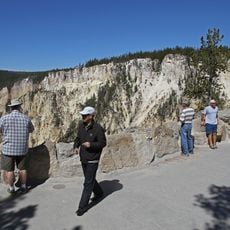
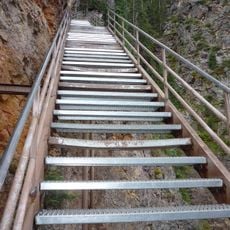
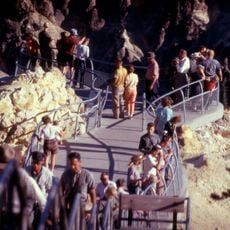
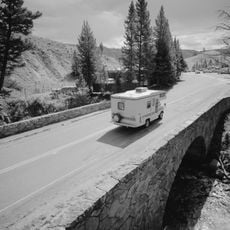
Tower Fall is about three miles south of Roosevelt Junction on the Tower-Canyon road. The fall can be reached both at the brink and at the foot, and views are possible from either side of the canyon. The creek's flow in spring is about ten times that of autumn.
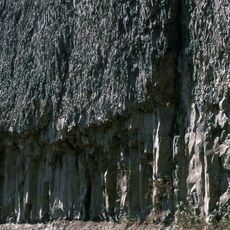
The spires at the crest are amygdaloid rock, not basalt: the stream has cut through amygdaloid masses, leaving friable pinnacles 50 to 100 feet tall that crumble under slight pressure. Gustavus C. Doane's 1871 report counted eight spires crowning the fall, several standing like sentinels on its brink.
The community of curious travelers
AroundUs brings together thousands of curated places, local tips, and hidden gems, enriched daily by 92,722 contributors worldwide.