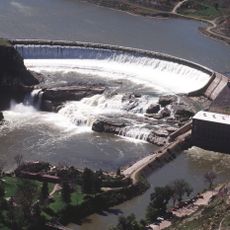
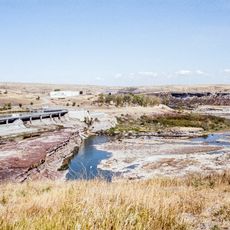
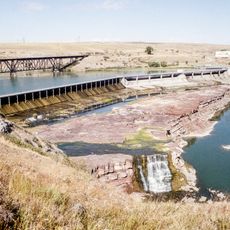
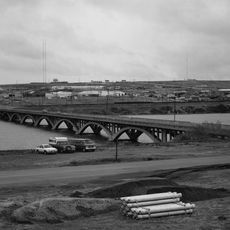
Lake Great Falls, Former glacial lake in central Montana, United States
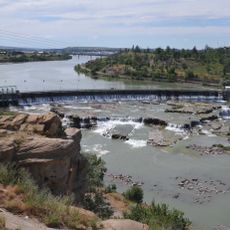
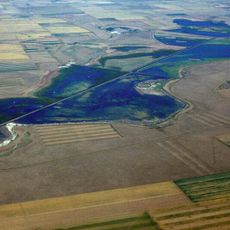
Lake Great Falls was a glacial lake in central Montana that stretched between Cut Bank and Holter Lake. The water body filled a large basin that is now visible only through geological layers and ancient shoreline marks found across the region.
The lake formed around 15,000 years ago when the Laurentide Ice Sheet blocked the Missouri River and created a massive water basin. Thousands of years later, the ice dam failed and the water drained away in a catastrophic flood.
The geological formations and sedimentary layers from Lake Great Falls provide scientists with information about climate patterns during the last ice age period.
The remnants of the former lake are today mainly of interest to geologists and researchers who study ancient shorelines and sediment deposits in the landscape. Visitors can recognize these features with expert guidance, though they are easily overlooked without explanation.
The draining of the lake left behind a striking feature called Shonkin Sag, a deep meltwater channel that cuts through the Highwood Mountains. This geological scar reveals the enormous force of water movement that reshaped the land.
The community of curious travelers
AroundUs brings together thousands of curated places, local tips, and hidden gems, enriched daily by 60,000 contributors worldwide.