Fort Buford, Military historic district in North Dakota, United States
Fort Buford is a preserved military post located where the Missouri and Yellowstone rivers meet, featuring original stone and brick structures from its operational years. The site includes a powder magazine, officers' quarters, and other buildings that outline the fort's physical layout and purpose.
The post was established in 1866 to secure military control of the frontier and serve as a supply hub for regional operations. It remained active until 1895, playing a key role during the period of frontier consolidation and military-Native American relations.
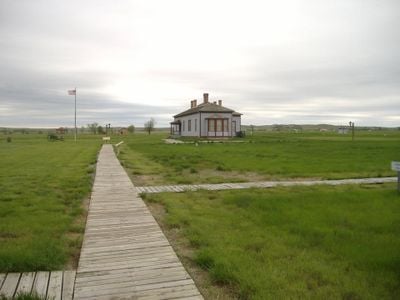
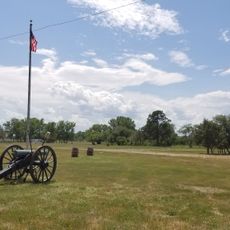
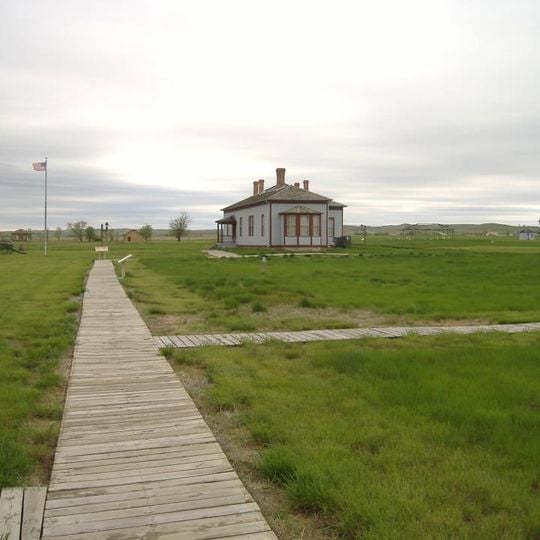
Sitting Bull surrendered here in 1881 with his Hunkpapa Lakota band. The fort's name honors Major General John Buford, a Union cavalry general killed in 1863. The reconstructed barracks stands where the original adobe barracks formed the short leg of an L. A small flag on a pole stands near the boardwalk.
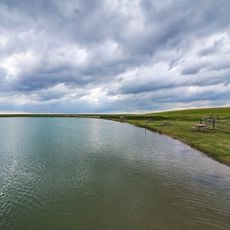
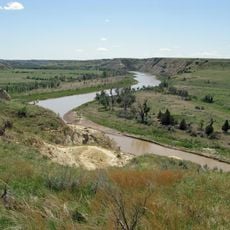
Fort Buford lies near the confluence of the Missouri and Yellowstone rivers in Williams County, North Dakota, about 35 kilometers southwest of Williston. The reconstructed barracks stands where the original adobe barracks formed the short leg of an L. A wooden boardwalk leads to the building, whose white horizontal siding, dark grey shingled roof and two brick chimneys are visible from the grounds.
The sandstone powder magazine was built in 1875, not with the first camp, from stone quarried north of the fort. It held over a million rounds, much of it black-powder cartridges such as the .45-70, and supplied the 1876–1877 campaigns in Montana Territory.
The community of curious travelers
AroundUs brings together thousands of curated places, local tips, and hidden gems, enriched daily by 92,779 contributors worldwide.