Devils Thumb, Mountain summit in Southeast Alaska, United States.
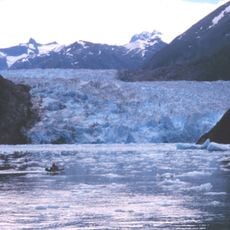
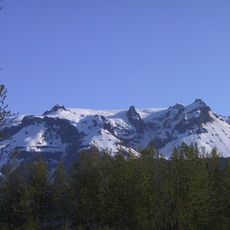
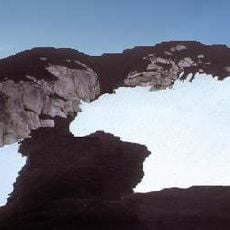
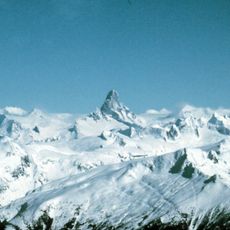
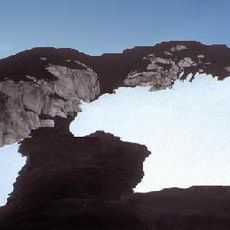
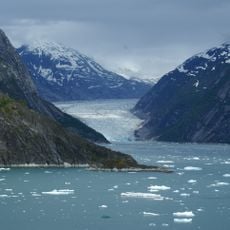
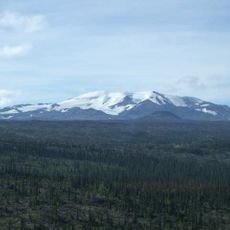
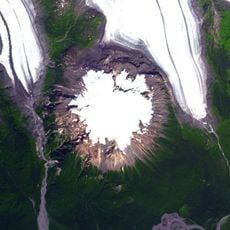
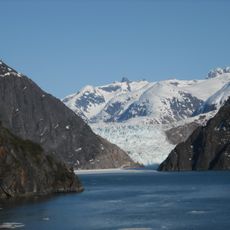
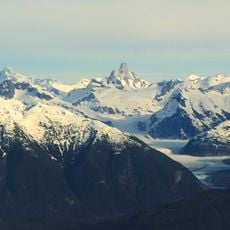
Devils Thumb is a dark, jagged rock horn on the Alaska–British Columbia border in the Stikine Icecap, rising to 2,767 m (some sources give 2,777 m). Its bare summit pyramid carries snow only on narrow ledges and gullies, while broad snowfields form its base and shoulders. The Northwest Face drops 2,042 m from the summit to the Witches Cauldron at an average angle of 67 degrees.
Fred Beckey, Clifford Schmidtke and Bob Craig made the first ascent in 1946 via the East Ridge, combining technical difficulty with remoteness and severe weather. Jon Krakauer climbed the same ridge in 1977, recounting it in Eiger Dreams and Into the Wild. In 2023 Alex Honnold and Tommy Caldwell traversed all five peaks of the skyline in under 12 hours.
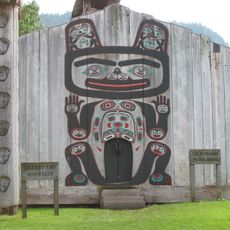
The Tlingit name Taalkhunaxhkʼu Shaa means 'the mountain that never flooded.' Tlingit tradition holds that people took refuge on the peak during Aangalakhu, the Great Flood. The mountain is also listed on maps as Boundary Peak 71, marking the Alaska–British Columbia border.
The Northwest Face rises 6,700 ft from the Witches Cauldron at an average angle of 67 degrees, with bad rock, bad ice and avalanches; Dieter Klose reached only halfway in 1982, higher than anyone then alive. Approach from Petersburg via the Stikine Icecap; the face rarely comes into condition.
The northwest face is one of North America's largest vertical rock walls, maintaining an average slope of 67 degrees throughout. This extreme steepness makes the wall legendary among climbers and defines its appearance more than any other feature.
The community of curious travelers
AroundUs brings together thousands of curated places, local tips, and hidden gems, enriched daily by 94,550 contributors worldwide.