Cheyenne Bottoms, Wetland and Ramsar site in Barton County, United States.
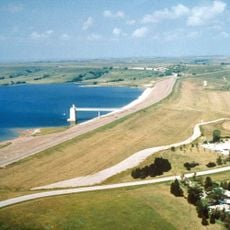
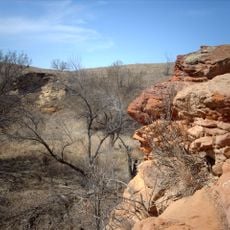
Cheyenne Bottoms is a 41,000-acre natural land sink in Barton County, central Kansas, the largest wetland in the interior United States. It is impounded and divided by dikes into five pools, with Pool 1 at the center and Pools 2, 3A–3B, 4A–4B and 5 around it. The pools average less than one foot deep, surrounded by mudflats, ponds, islands and grassland bluffs up to 100 feet high.
In 1925 Kansas created its Forestry, Fish and Game Commission to develop and care for the Bottoms. After the 1937 Pittman-Robertson Act taxed sporting arms and ammunition, funds became available; dikes, roads and hunting blinds followed, and part of the area opened to public hunting in 1952. A new canal from the Arkansas River was built in 1957, and 1990s renovations subdivided the marshes.
Greyhound racing in the United States traces its start to a coursing event held in the bottoms in 1886. Waterfowl hunting, mainly for geese, is still permitted along the southern border of the state wildlife area, and the Kansas Forestry, Fish and Game Commission, created in 1925, was charged with developing and caring for the wetland.
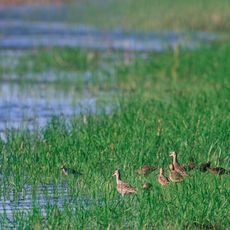
The Bottoms is reached by unpaved gravel roads, several running along the tops of the dikes; U.S. Route 281 passes 2 miles (3.2 km) west of it, and Kansas Highway 156 crosses its southeast portion. Pools 1 and 5 are closed to all human activities, and waterfowl hunting, mainly for geese, is allowed along the southern border of the wildlife area. Spring migration brings up to 600,000 shorebirds, fall up to 200,000.
Greyhound racing in the United States traces its start to a coursing event held in the Bottoms in 1886. The wetland also lies on the 29-site United States list of Ramsar wetlands, designated on 19 October 1988.
The community of curious travelers
AroundUs brings together thousands of curated places, local tips, and hidden gems, enriched daily by 93,062 contributors worldwide.